A2 Cow Ghee vs. Buffalo Ghee: Bilona Method, Health Benefits, Digestion & Weight Management

If you have ever stood in front of a grocery shelf wondering “A2 cow ghee or buffalo ghee- which is better?”, you are not alone. Today, ghee comes with labels such as A2, Bilona, traditional, cultured and commercial, making the choice more confusing than it needs to be.
The truth is simpler: cow ghee and buffalo ghee are both concentrated dairy fats, but they can differ in their fatty-acid profile, colour, flavour, texture and method of preparation. A2 refers to a type of beta-casein protein in milk, while Bilona refers to a traditional way of making ghee. Neither label, by itself, guarantees superior health benefits.
A2 cow ghee and buffalo ghee mainly differ in their milk source, fatty-acid profile, colour, texture and processing method. Cow ghee is often golden and milder, while buffalo ghee is generally richer and firmer. A2 and Bilona describe specific characteristics, but neither automatically guarantees greater health benefits.
So, which one should you choose? Let’s break it down without the confusing health claims.
Cow Ghee vs Buffalo Ghee: What’s the Real Difference?
The first difference is where the milk comes from.
Cow and buffalo milk naturally have different fat compositions, and those differences can carry over into the ghee made from them. Research comparing dairy fats shows differences in short-chain, saturated and unsaturated fatty acids between cow and buffalo sources.
Cow ghee is commonly associated with a golden-yellow colour, milder aroma and softer texture. Buffalo ghee is often paler, richer and firmer.
There is also a difference in how consumers traditionally use them. Cow ghee is popular for everyday cooking, dal, khichdi and roti, while buffalo ghee is often preferred where a richer taste and firmer texture are wanted.
But when it comes to calories, the difference is much smaller than many people expect.
Cow Ghee vs Buffalo Ghee: What Do You Get in 100g?
Ghee is almost entirely milk fat. In India, Food Safety and Standards Authority of India standards specify a minimum of 99.5% milk fat for ghee.
A practical nutrition comparison looks like this:
| Nutrient | Cow Ghee (per 100 g) | Buffalo Ghee (per 100 g) |
|---|---|---|
| Energy | ~898–900 kcal | ~898–900 kcal |
| Total Fat | ~99–100 g | ~99–100 g |
| Protein | <1 g | <1 g |
| Carbohydrates | <1 g | <1 g |
| Butyric Acid | Present | Present |
| Vitamin A | Present | Present |
| Vitamin E | Present | Present |
| Carotenoids | Generally higher | Generally lower |
| Cholesterol | Naturally present | Naturally present |
Values are approximate. Actual composition can vary with milk source, breed, feed and processing.
So, which one has fewer calories?
Practically, neither is a low-calorie winner.
Both cow and buffalo ghee are concentrated fats. The more interesting differences are in their fatty-acid composition, natural pigments, flavour and processing rather than their calorie content.
Research has found butyric acid in both cow and buffalo-derived dairy fats, with reported averages varying by source. One review reported about 3.17% butyric acid in cow milk fat and 4.06% in buffalo milk fat, while individual ghee studies can show different values.[NIH]
That variation is exactly why a brand should avoid promising a fixed butyrate level unless it has product-specific laboratory testing.
A2 Ghee: Does the A2 Protein Really Make a Difference?
This is where the A2 conversation needs a little clarity.
A1 and A2 are types of beta-casein, a milk protein. They are not different types of fat.
Some research has investigated whether A2 milk causes fewer digestive symptoms than milk containing A1 and A2 beta-casein. A systematic review of human studies found moderate-certainty evidence for some digestive differences, but much lower certainty for many other health outcomes.
A randomized crossover trial in adults also reported differences in some gastrointestinal measures between A1-containing and A2-only milk. Other randomized research has found fewer gastrointestinal symptoms with A2-only milk in certain people with lactose maldigestion.
But here is the important part:
Ghee is predominantly milk fat, not milk protein.
So, we should not take evidence about drinking A2 milk and automatically say that A2 ghee is easier to digest.
That doesn't make the A2 label meaningless. It tells you something about the milk source, but it should not be presented as a guarantee of better digestion or better health.
Bilona Ghee vs Commercial Ghee: Does the Making Process Matter?
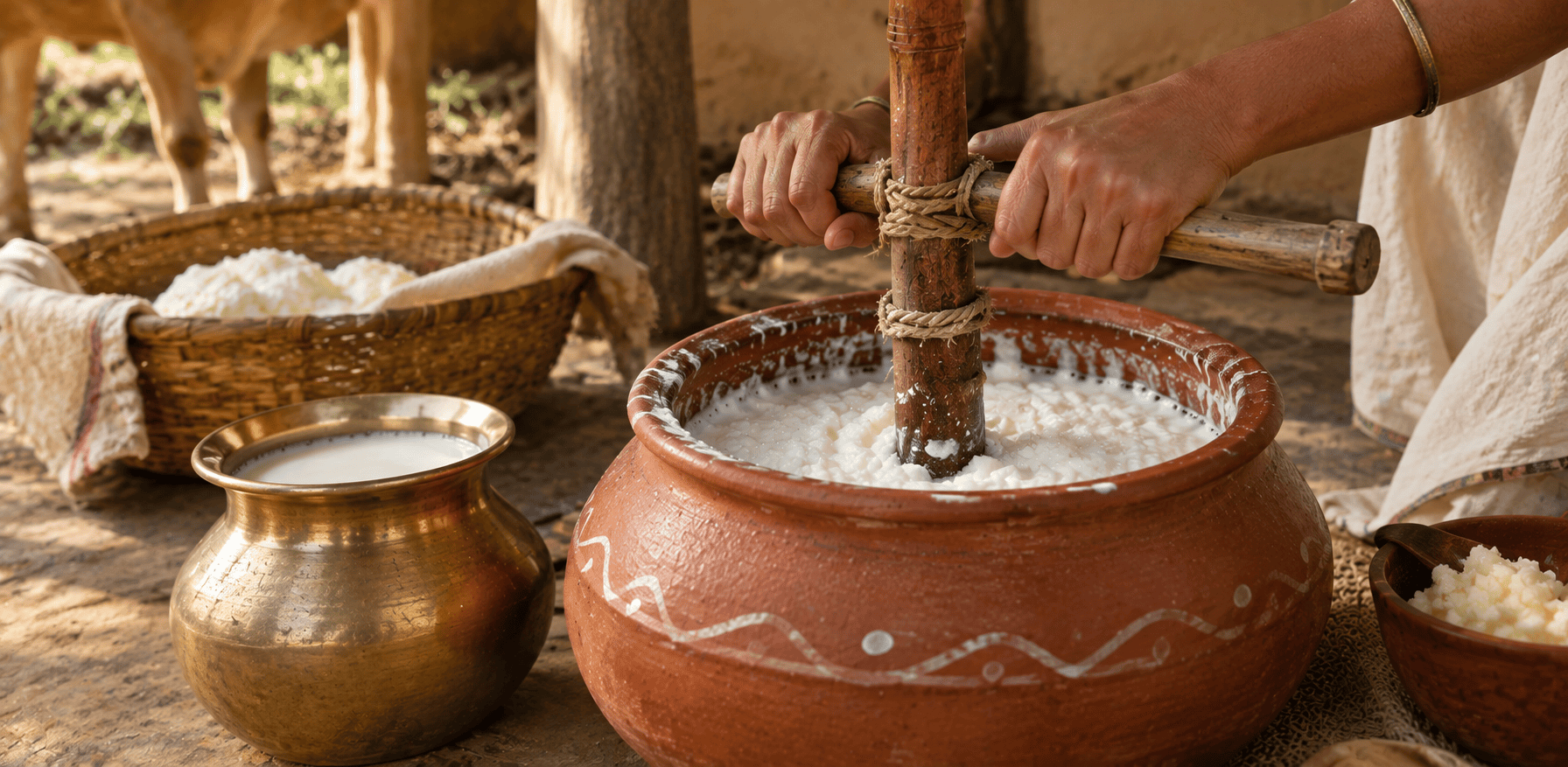
The word Bilona refers to a traditional method of preparing ghee.
The basic process is:
Milk → Curd → Churning → Butter → Slow heating → Ghee
The curd is traditionally churned to separate butter, and the butter is then heated until the milk solids separate and the clarified fat becomes ghee.
Commercial processing can use a different route, such as separating cream first, making butter and then converting that butter into ghee.
So, does Bilona automatically mean healthier?
Not necessarily.
The method can influence the ghee's aroma, flavour, texture and character. But the word Bilona alone does not prove that the final product contains more butyric acid or delivers greater health benefits.
A product-specific laboratory analysis is needed to support those claims.
This is an important distinction because traditional preparation and nutritional superiority are not always the same thing.
For consumers, a better question is:
Does the brand clearly explain where the milk comes from and how the ghee is made?
That transparency tells you much more than a marketing label alone.
What Are the Real Benefits of Cow Ghee?
Cow ghee has been used in Indian cooking and Ayurvedic food traditions for generations. Modern nutrition research gives us a more measured way to understand what it actually contributes.
Does Cow Ghee Support Digestion?
Cow ghee contains naturally occurring short-chain fatty acids, including butyric acid.
Butyrate is especially interesting because it is an important energy source for cells lining the colon and plays a role in normal intestinal function. Research also connects butyrate with intestinal barrier and mucosal functions.
However, there is an important difference between butyrate in ghee and butyrate produced inside the gut.
A large amount of colonic butyrate is produced when gut bacteria ferment dietary fibre and other fermentable carbohydrates.
So, eating more ghee does not automatically mean more gut butyrate.
In simple terms:
Ghee can contain butyric acid, but fibre is still essential for supporting your gut microbiome and its natural production of butyrate.
This is why foods such as vegetables, fruits, pulses, whole grains, nuts and seeds still matter.
Does Cow Ghee Provide Vitamins?
Ghee contains small amounts of fat-soluble vitamins and other minor milk-fat compounds. Studies examining cow and buffalo ghee have detected compounds associated with vitamins A, E, K and other milk-fat components, although the amount depends on the source and processing method.
Think of these as a useful part of ghee's nutritional profile—not a reason to replace a varied diet with more ghee.
Why Is Cow Ghee Golden?
The familiar golden colour of many cow ghee products can partly come from carotenoid pigments, including beta-carotene.
Research examining different ghee extraction methods has detected beta-carotene and vitamin-related compounds in both cow and buffalo ghee, with some methods retaining more beta-carotene in cow ghee.
But don't use colour as your only purity test.
Golden ghee isn't automatically better ghee.
Why Is Ghee So Useful in Indian Cooking?
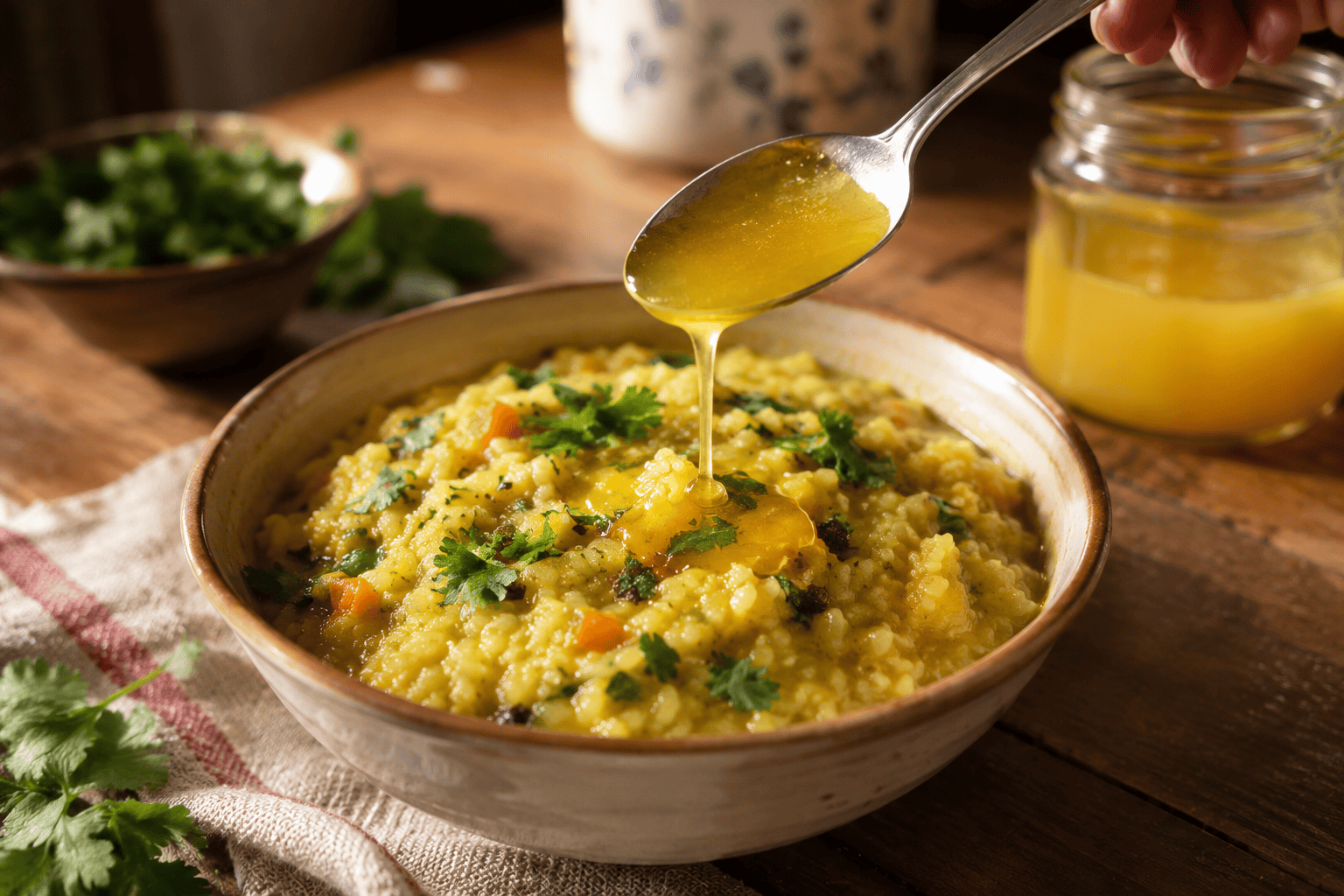
Sometimes the simplest benefit is the most practical.
A little ghee can add aroma and richness to:
-
Dal and khichdi
-
Roti and paratha
-
Rice
-
Tadka
-
Roasted vegetables
-
Traditional sweets
You don't need a large amount to get that familiar flavour.
Cow Ghee vs Buffalo Ghee for Digestion: Which Is Better?
There is no universal answer.
Cow ghee is often described as being lighter or easier to digest, especially in traditional wellness discussions. But from a modern nutrition perspective, individual tolerance matters more than simply choosing cow over buffalo.
Also remember that the A2 discussion relates to milk protein, while ghee is predominantly fat.
Butyrate is important for normal gut function, but the body's main colonic supply comes from microbial fermentation of dietary fibre- not from consuming unlimited amounts of ghee.
So if digestion is your priority, consider the complete picture:
quality of the ghee + portion size + your individual tolerance + the fibre and overall quality of your diet.
If a particular ghee consistently feels heavy or causes discomfort, choosing another product—or discussing your symptoms with a healthcare professional- makes more sense than assuming one type is universally better.
Can Cow Ghee Help With Weight Management?
Let's clear up one common misconception first:
Cow ghee is not a weight-loss food.
Neither cow ghee nor buffalo ghee has a special ability to burn body fat.
Both are calorie-dense, so the quantity you eat matters.
For example, adding a teaspoon to dal is very different from adding several tablespoons across breakfast, lunch and dinner.
Ghee can still fit into a balanced eating pattern. The key is to treat it as a concentrated cooking fat, not as a weight-loss supplement.
And while butyrate research includes interesting findings around energy metabolism and satiety, that research does not mean that eating more ghee will automatically result in weight loss. Human evidence around butyrate and metabolic outcomes remains an active research area.
Which Ghee Is Better for Cooking?
Both can work well in Indian cooking. Your choice can come down to the type of dish and the flavour you prefer.
Cow ghee: generally milder, aromatic and often golden.
Buffalo ghee: generally richer and firmer, with a stronger dairy-fat character.
Ghee is commonly used for tadka, sautéing, roasting and other cooking applications because it is relatively heat-stable.
You may see a smoke-point figure such as 250°C to 252°C (482°F to 485°F) quoted online for ghee. However, smoke point can vary with the product, purity, free fatty-acid level and testing method, so it is better not to treat 232°C as a guaranteed value for every ghee.[wikipedia]
A simple kitchen rule works well:
Heat ghee according to the recipe and avoid repeatedly heating it until it visibly smokes.
How Much Cow Ghee Should You Eat in a Day?
Around 1–2 teaspoons (approximately 5–10 g) can be used as a practical daily serving for many healthy adults, depending on their overall diet, energy needs and other sources of fat.
That can be enough for:
-
Finishing dal or khichdi
-
Spreading lightly on roti
-
Making a tadka
-
Roasting ingredients
-
Adding richness to traditional recipes
Remember that 1 teaspoon and 1 tablespoon are very different portions. Since ghee is almost entirely fat, larger amounts can increase calorie intake quickly.
And although ghee contains butyric acid, that is not a reason to consume it in unlimited quantities. Your gut also needs the dietary fibre that helps your microbiome naturally produce butyrate.
Health note: Ghee can be part of a balanced diet, but it is not a treatment or cure for digestive disorders, obesity, diabetes, high cholesterol or any other medical condition. If a doctor or dietitian has advised you to limit fat, saturated fat or calories, follow their individual recommendation.
Why Choose Nourish Pure Cow Ghee?
When you're choosing a cow ghee for everyday use, don't look only at words such as A2 or Bilona.
Look at the bigger picture:
Where does it come from? How is it made? What does the label tell you? Is the brand transparent about quality?
That is a more useful way to shop for ghee.
Nourish Store focuses on nutrition and quality across its food range, and its official brand information states that its products undergo quality checks at multiple stages.
For everyday Indian cooking, Nourish Pure Cow Ghee can naturally fit into familiar meals such as dal, khichdi, roti, paratha and traditional recipes.
The goal isn't to turn ghee into a miracle food.
It's simply about choosing a quality product and enjoying a traditional cooking fat in sensible portions.
So, Which Ghee Should You Actually Choose?
There isn't one ghee that is best for everyone.
| If you want... | Consider |
|---|---|
| Everyday Indian cooking | Cow ghee |
| Milder, aromatic flavour | Cow ghee |
| Richer, firmer texture | Buffalo ghee |
| Traditional curd-churned preparation | Bilona ghee |
| Weight management | Either, but watch portions |
| Better digestion | Choose based on individual tolerance |
If you prefer the taste and aroma of cow ghee, there is no need to switch to buffalo ghee simply because it has a different fat profile.
And if you enjoy buffalo ghee, there is no scientific reason to assume that cow ghee is automatically superior.
The better choice is the one that fits your food preferences, cooking habits, nutritional needs and budget.
Your Questions About Cow Ghee vs Buffalo Ghee, Answered
Is A2 cow ghee easier to digest than buffalo ghee?
Not necessarily. A2 refers to a type of beta-casein protein in milk, while ghee is predominantly milk fat. Some studies have found digestive differences between A1- and A2-containing milk, but those findings should not automatically be applied to ghee.
Which is better for digestion: cow ghee or buffalo ghee?
There is no universal winner. Individual tolerance, portion size and your overall diet matter. Cow ghee may be preferred by some people, but it should not be presented as automatically easier to digest for everyone.
Does Bilona ghee have more butyric acid?
Not automatically. Bilona describes a traditional preparation method. The actual fatty-acid composition depends on the milk source, breed and processing, so a higher butyric-acid claim needs product-specific testing.
What are the benefits of butyric acid in ghee?
Butyric acid is a short-chain fatty acid and an important energy source for colon cells. But most colonic butyrate is produced by gut bacteria fermenting dietary fibre, so ghee should not be considered a replacement for fibre-rich foods.
Is cow ghee good for weight loss?
No ghee should be treated as a weight-loss food. Cow ghee is calorie-dense, so portion size and total calorie intake matter much more.
Which ghee is better for daily cooking?
Both can work well. Cow ghee is often chosen for its milder flavour and aroma, while buffalo ghee may be preferred when a richer, firmer fat is desired.
Why is cow ghee yellow while buffalo ghee is often white?
Natural carotenoid pigments can contribute to the yellow colour of cow ghee. Buffalo ghee is generally paler. However, colour alone cannot prove purity or quality.
How much cow ghee should I eat daily?
Around 1–2 teaspoons (5–10 g) can be a practical serving for many healthy adults, depending on their overall diet and energy needs. Individual recommendations may differ.
Is A2 ghee actually different from regular ghee?
The A2 label refers to the type of beta-casein in the milk used as the starting material. Because ghee is predominantly milk fat, the A2 distinction should not be treated as proof that the finished ghee has superior digestive or health effects.
The Bottom Line: Cow Ghee or Buffalo Ghee?
Cow ghee and buffalo ghee are both traditional dairy fats, and neither needs to be labelled the universal winner.
Cow ghee is often golden, aromatic and milder, while buffalo ghee is generally richer and firmer. Their calorie and total-fat content are broadly similar, while their fatty-acid profiles and minor components can differ.
If you're considering A2 or Bilona ghee, look beyond the label. A2 tells you about milk protein, while Bilona tells you about the traditional preparation method. Neither alone proves that a ghee is healthier or easier to digest.
For everyday use, focus on quality, transparent sourcing, preparation method, taste and portion size.
And most importantly, enjoy ghee for what it is: a traditional, flavourful cooking fat that can have a place in a balanced Indian diet.