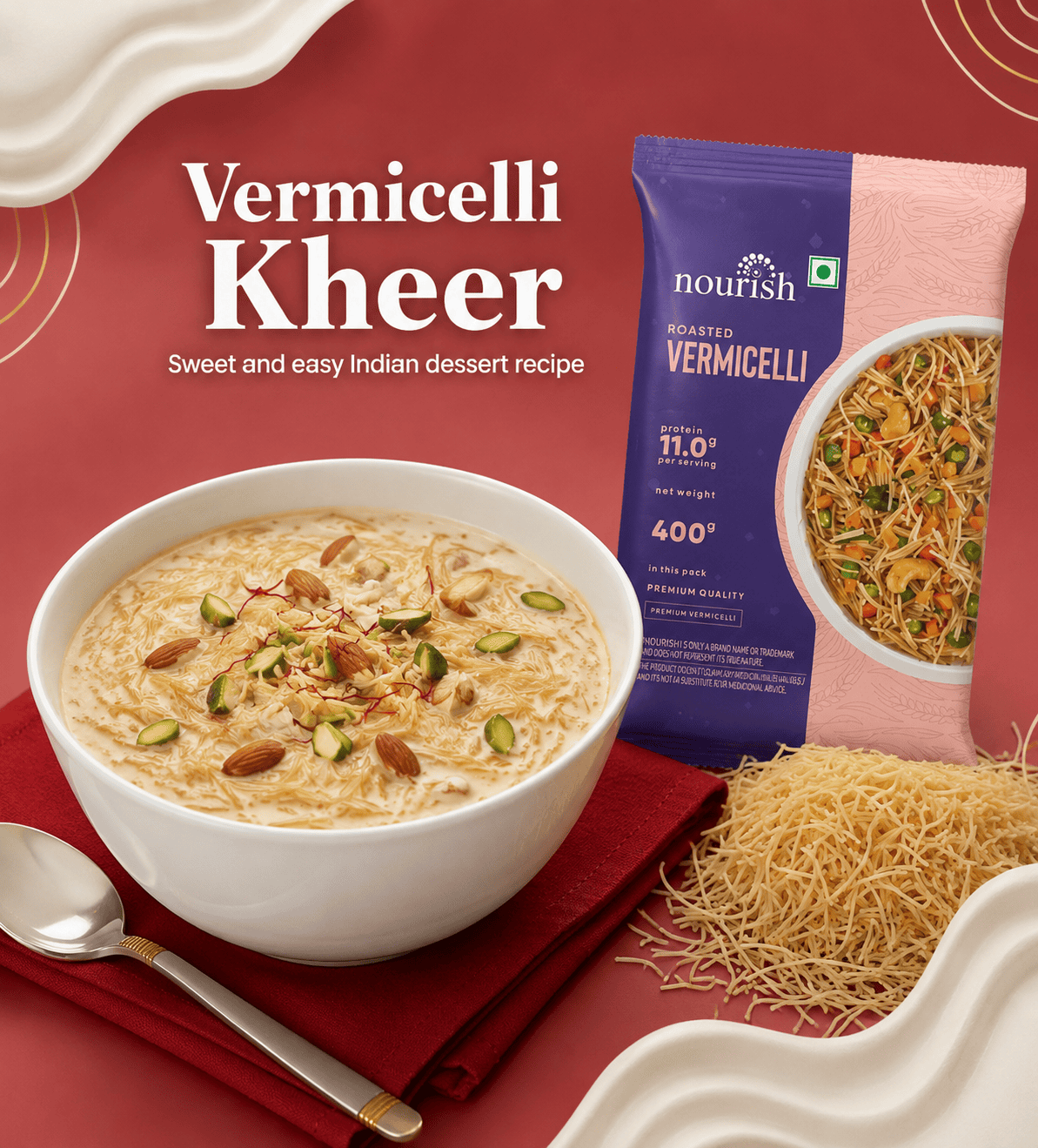
Vermicelli Kheer Recipe (Seviyan Kheer)
Learn how to make creamy Vermicelli Kheer Recipe (Seviyan Kheer) with roasted vermicelli, milk, cardamom and nuts. An easy Indian festival dessert ready in 25 minutes.

25 MIN

4 Servings

Dessert
1 votes
Ingredients
- 1 cup roasted whole wheat vermicelli (seviyan/semiya)
- 1 litre full-fat milk
- 2 tablespoons ghee
- ½ cup sugar (adjust according to taste)
- ½ teaspoon cardamom powder
- 10–12 cashews, chopped
- 10–12 almonds, sliced
- 10–12 pistachios, sliced
- 2 tablespoons raisins
- A few saffron strands (optional)
- 1 teaspoon rose water or kewra water (optional)
Methods
Step 1: Roast the Dry Fruits
Heat the ghee in a heavy-bottomed pan over low to medium heat. Add the chopped cashews, almonds, and pistachios, and roast until they turn lightly golden. Add the raisins and cook for another 20–30 seconds until they puff up. Transfer the roasted dry fruits to a plate and keep them aside.
Pro Tip
Roasting the dry fruits separately keeps them crunchy and prevents them from becoming soft while the kheer simmers.
Step 2: Sauté the Vermicelli in Ghee
Using the same pan, add the roasted vermicelli and sauté it gently in the remaining ghee for 1-2 min over low heat. This enhances the aroma and coats the strands evenly without overcooking them.
Pro Tip
For a richer flavour and better texture, use roasted vermicelli. It cooks evenly, stays separate, and gives the kheer a smooth, creamy consistency.
Step 3: Simmer the Milk
Pour the full-fat milk into the pan and bring it to a gentle boil over medium heat. Once it starts boiling, reduce the flame and let it simmer for about 4–5 minutes, stirring occasionally and scraping the sides of the pan.
Pro Tip
Slow simmering naturally thickens the milk and creates a creamier kheer without using condensed milk or cream.
Step 4: Cook the Vermicelli
Add the roasted vermicelli and raisins to the simmering milk. Stir well to prevent the strands from sticking together. Cook over low heat for 8–10 minutes until the vermicelli becomes soft while still holding its shape.
Pro Tip
Stir every minute or two, especially during the first few minutes. This prevents the vermicelli from settling at the bottom and sticking to the pan.
Step 5: Add Sugar and Flavourings
Once the vermicelli is fully cooked, stir in the sugar and cardamom powder. If using saffron, soak the strands in a tablespoon of warm milk for a few minutes before adding them to the kheer. Simmer for another 2–3 minutes until the sugar dissolves completely.
Pro Tip
Always add sugar after the vermicelli softens. Adding it too early can slightly slow the cooking process and affect the final texture.
Step 6: Finish and Garnish
Turn off the heat and stir in most of the roasted dry fruits. If using rose water or kewra water, add it at the very end to preserve its delicate aroma. Garnish with the remaining nuts and allow the kheer to rest for 5 minutes before serving. Serve warm for a comforting dessert or refrigerate for 2–3 hours if you prefer chilled Vermicelli Kheer.
Pro Tip
The kheer naturally thickens as it cools. If it becomes too thick after refrigeration, stir in a little chilled milk before serving.
Frequently Asked Questions
1. Can I make Vermicelli Kheer with condensed milk?
Yes, you can make vermicelli kheer with condensed milk. Add it towards the end of cooking for a rich, creamy texture and reduce the sugar since condensed milk is already sweetened. It creates a delicious, festive dessert in less time.
2. Can I use jaggery instead of sugar?
Yes, but add melted and slightly cooled jaggery only after removing the kheer from the heat. Mixing jaggery directly into boiling milk may cause the milk to curdle. Jaggery gives the kheer a deeper, caramel-like flavour.
3. Which vermicelli is best for making kheer?
Thin roasted whole wheat vermicelli is the most commonly used option because it cooks quickly and gives the kheer a traditional taste and texture. If using unroasted vermicelli, roast it lightly in ghee before cooking.
4. What's the difference between Vermicelli Kheer, Seviyan Kheer, and Semiya Kheer?
The recipe is almost the same. The difference is mainly the regional name. In North India, it is commonly called Seviyan Kheer, while in many South Indian homes it is known as Semiya Kheer. The ingredients and cooking method remain very similar, although regional variations may include coconut milk, jaggery, or different flavourings.
Great Meals, Great Deals
Savoring Flavour Without Breaking the Bank
Reviews
Your Email address will not be published. Required fields are marked*
Reviews
Deal of the month
Grab The Never Ever Deals on Grocery Items