Besan Benefits: Nutrition, Weight Loss, Skin Uses & Side Effects Explained
There's something quietly powerful about besan that most of us have known all our lives without truly recognizing it. This golden flour sits in nearly every Indian kitchen, passed down through generations, used in everything from simple rotis to beloved pakoras. But besan - what the world now calls chickpea flour or gram flour - is having its moment for reasons that go far beyond nostalgia.
If you've been hearing about besan for weight loss, diabetes management, or even glowing skin, you're not imagining things. This humble ingredient carries genuine nutritional strength. It's naturally gluten-free, surprisingly high in protein, and gentle on blood sugar levels in ways that wheat flour simply isn't. Whether you're trying to eat lighter, manage health conditions, or just understand what you're feeding your family, besan deserves a closer look - not because it's trendy, but because it actually works when used thoughtfully. And like most good things, it comes with a few considerations worth knowing about too.
Nutritional Value of Besan (Chickpea Flour)
What makes besan different from regular atta starts at the most basic level: what's actually inside it. When you hold a handful of besan, you're holding ground chana dal, which means you're getting all the goodness that comes with legumes rather than grains. If you are looking for pure quality, Chana Besan from Nourish is a great example of this nutritional density.
The protein content is the first thing that stands out. Besan gives you nearly double the protein of wheat flour - around 20-22 grams per 100 grams. That's significant when you consider that many of us struggle to get enough protein without relying heavily on dal or paneer at every meal.
Then there's fiber, which besan carries in generous amounts. This is the kind of fiber that actually does something - it slows down digestion, keeps you feeling satisfied longer, and helps everything move smoothly through your system. It's part of why besan-based foods don't leave you hungry an hour later the way plain rice sometimes does.
| Nutritional Factor | Benefit Details |
|---|---|
| Protein | 20-22g per 100g (Double of wheat) |
| Fiber Content | High (Supports digestion & satiety) |
| Natural Nutrients | Rich in Iron and Folate |
| Glycemic Index | Low (Steady energy release) |
Iron and folate come along naturally too, which matters especially if you're vegetarian or supporting someone through pregnancy. These aren't added nutrients - they're just there because chickpeas are inherently nourishing.
Perhaps most importantly, besan has a low glycemic index. What this means in plain terms: it doesn't spike your blood sugar the way refined flours do. It releases energy slowly and steadily, which is exactly what your body prefers.
Health Benefits of Besan for the Body
When you eat besan regularly - in rotis, in chilla, or even in kadhi - you're giving your digestive system something it can work with comfortably. That fiber we mentioned earlier? It feeds the good bacteria in your gut and keeps things moving without the heaviness that sometimes comes with wheat-based meals. Many people notice they feel lighter after a besan roti compared to regular chapati, and there's actual biology behind that feeling.
"Your heart benefits quietly too. Besan contains almost no cholesterol and brings along healthy fats that support cardiovascular function rather than burdening it. The soluble fiber helps manage cholesterol levels naturally, which is particularly valuable if heart health runs in your family."
Blood sugar stability is where besan truly shines. Unlike refined flour that floods your bloodstream quickly, besan releases glucose gradually. Your pancreas doesn't have to work overtime, your energy doesn't crash mid-afternoon, and you avoid that desperate need for something sweet an hour after eating. For anyone watching their sugar levels or simply trying to avoid energy rollercoasters, this matters enormously.
And because besan is dense with both protein and fiber, it provides lasting energy. You're not just filling space in your stomach - you're actually nourishing your body in ways that carry you through your day with steady strength.
Besan Benefits for Weight Loss – How It Actually Helps
Let's talk honestly about weight loss and besan, because there's a lot of wishful thinking out there. Besan won't magically melt anything away. But it does create conditions that make eating less feel more natural, and that's worth far more than any miracle promise.
The satiety factor is real. When you eat a besan roti or a simple besan chilla for breakfast, you feel genuinely satisfied in a way that lasts. You're not eyeing snacks by 11 AM. You're not thinking about food constantly. This happens because protein and fiber together slow down the emptying of your stomach and keep hunger hormones in check. You eat less throughout the day without white-knuckling through cravings.
Portion control becomes easier too. A couple of besan rotis feel substantial where you might normally reach for three or four regular chapatis. You're consuming fewer calories without feeling deprived, which is the only kind of calorie reduction that actually works long-term.
If you're specifically making besan rotis at home, you're also likely being more mindful about what you're eating. Mindful eating - paying attention, chewing slowly, actually tasting your food - contributes to weight management in ways we often underestimate.
But here's the honest part: besan is calorie-dense. It's nutritious, yes, but it's not low-calorie. If you're making besan pakoras every evening or adding too much oil to your chilla, you'll gain weight despite all the protein. The benefit comes from using besan to replace heavier options and eating it in reasonable amounts with awareness.
Is Besan Good for Diabetes?
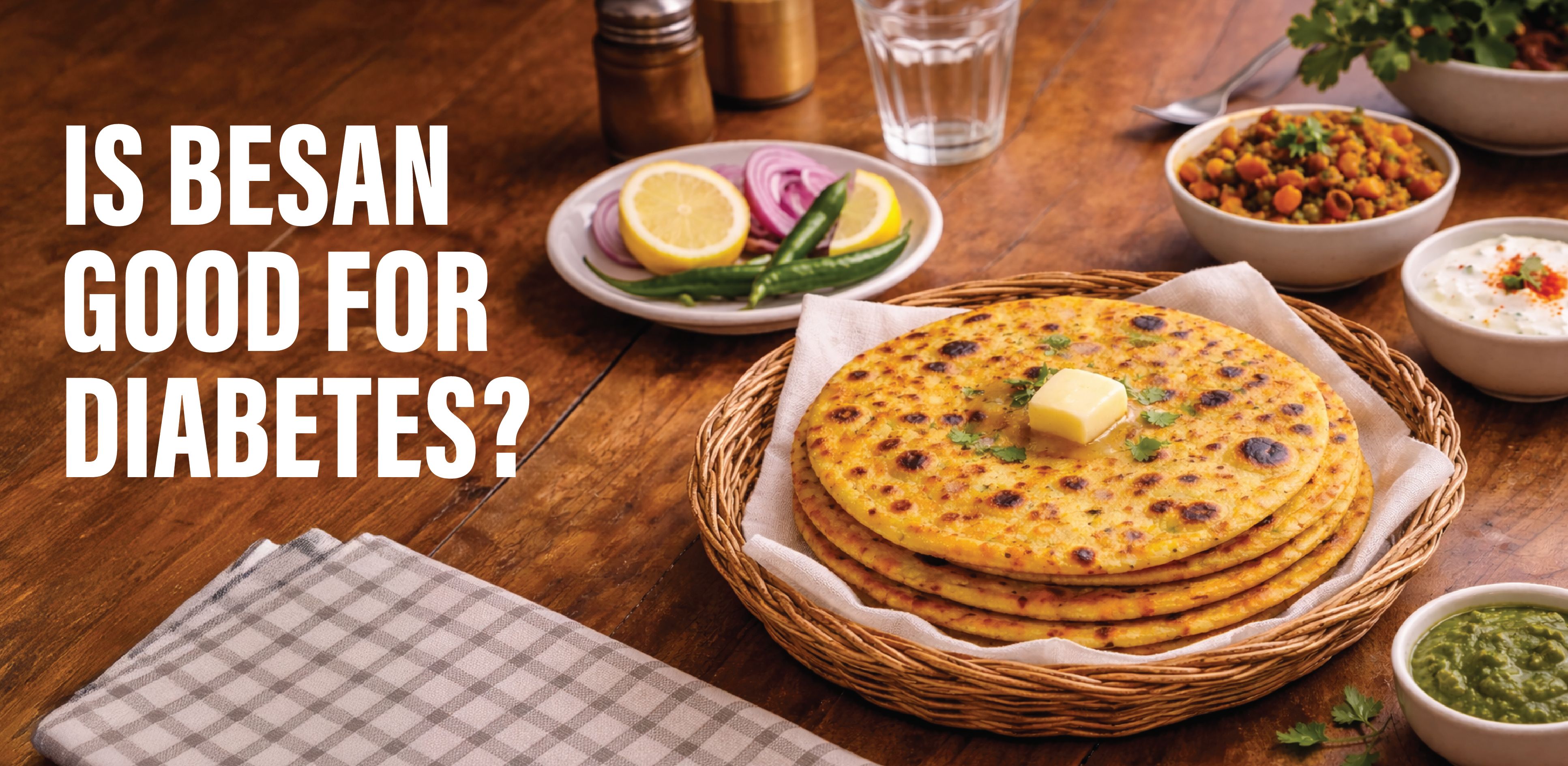
If you're managing diabetes or prediabetes, besan can become one of your most reliable kitchen allies. The low glycemic index isn't marketing language - it's a genuine metabolic advantage. When diabetics eat besan-based foods, their blood sugar rises slowly and moderately rather than spiking dangerously.
This is why many diabetes educators and dietitians now suggest besan rotis as an alternative to regular wheat rotis, especially for dinner. Your body processes it differently. The complex carbohydrates take longer to break down, which means your pancreas has time to release insulin gradually rather than in a panic.
Many people managing diabetes also struggle with protein intake, and besan helps bridge that gap naturally. The combination of moderate carbs, high protein, and substantial fiber creates a balanced response in your body. You're not just managing sugar levels - you're actually supporting better overall metabolism.
That said, "diabetes-friendly" doesn't mean unlimited. Moderation still matters. Two besan rotis with vegetables and maybe a small amount of ghee is supportive. Four rotis fried in excessive oil is not. Your portion size and what you pair besan with determines whether it helps or hinders.
If you're on medication, keep monitoring your levels as you introduce more besan into your diet, just as you would with any dietary change. Most people notice improvement, but everyone's body responds uniquely.
Besan Benefits for Skin & Face
Your grandmother probably told you about besan for skin, and she wasn't wrong - though perhaps the reasons have become clearer with time. Besan has been used on Indian faces for generations, primarily because it does something useful without causing harm for most people.
Oil control is the most noticeable benefit. If you have oily or combination skin, besan naturally absorbs excess sebum when used as a gentle cleanser or pack. It doesn't strip your skin completely dry the way harsh soaps do, but it does leave you feeling cleaner and more balanced.
There's a mild exfoliating effect too. The slightly grainy texture helps remove dead skin cells without being as abrasive as scrubs with microbeads or harsh granules. You're revealing fresher skin underneath, which is why people often mention a subtle glow after using besan.
Traditional Indian usage usually involves mixing besan with yogurt, milk, or rose water for face application. These combinations have stood the test of time because they work gently and safely for most skin types. The besan provides the cleansing action while the other ingredients add moisture and soothing properties.
But - and this is important - besan isn't miracle skincare, and it's not for everyone. If you have very dry or sensitive skin, using besan too frequently can feel uncomfortable or even drying. If you have active acne or broken skin, the texture might irritate rather than help. Listen to your skin. What works beautifully for your friend might not work identically for you, and that's completely normal.
Besan Benefits for Hair
Besan shows up in traditional hair care for similar reasons it works on skin - it cleanses without stripping, and it addresses oil balance naturally. If you've ever used besan as a hair cleanser, you probably noticed your scalp felt genuinely clean without that squeaky, over-dried feeling some shampoos leave behind.
For people with oily scalps, besan can help absorb excess oil and extend the time between washes. It's gentle enough to use regularly but effective enough that you actually notice a difference. Mix it into a paste with water or yogurt, massage it through your scalp, let it sit briefly, and rinse thoroughly.
Volume is another benefit people mention, though this likely comes from the cleansing effect rather than besan magically thickening your hair. When your scalp is clean and your hair isn't weighed down by product buildup or excess oil, everything naturally looks and feels fuller.
That said, besan on hair requires patience. It can be messy to apply and tedious to rinse out completely. If you don't rinse thoroughly, you might find grainy residue, which isn't pleasant. It's also not a replacement for actual hair care if you have specific concerns like severe dandruff or hair loss - those need proper attention.
Besan Benefits and Side Effects You Should Know
Every good thing has limits, and besan is no exception. Understanding both sides helps you use it wisely rather than blindly.
Overconsumption is the most common issue. Because besan is filling and nutritious, some people assume they can eat unlimited amounts. But besan is calorie-dense and quite rich in fiber. Too much at once can lead to bloating, gas, or digestive discomfort. Your system needs time to adjust, especially if you're not used to high-fiber foods.
Some individuals are sensitive to chickpeas or legumes generally. If you notice persistent bloating, cramping, or bathroom troubles after eating besan, your body might be telling you something. Not every healthy food works for every body, and that's okay. Trust what you're experiencing.
On skin, overuse is where most problems occur. Using besan packs daily or scrubbing too aggressively can irritate your skin, cause redness, or lead to dryness. Two or three times a week is plenty for most people. More isn't better - gentleness is.
If you're pregnant, besan is generally safe in normal food amounts, but this isn't the time to experiment with large quantities or unusual preparations. Keep things moderate and listen to your body's signals. Any specific concerns should go to your doctor, not the internet.
Allergies to chickpeas are rare but real. If you've never eaten besan before, start with small amounts and pay attention to how you feel. Genuine allergic reactions need medical attention immediately.
How to Use Besan Safely in Daily Diet
Bringing besan into your everyday eating doesn't require a complete kitchen overhaul - it's about simple, sustainable swaps that feel natural rather than restrictive.
Besan rotis are the easiest entry point. Mix besan with a bit of wheat flour if you find pure besan rotis too dense at first. Add a pinch of ajwain or jeera for flavor and digestive ease. Roll them slightly thicker than regular chapatis since besan doesn't bind as tightly. Pair them with vegetables and a modest amount of ghee - the ghee actually helps you absorb fat-soluble vitamins.
Besan chilla for breakfast is another beautiful option. Mix besan with water to make a batter, add finely chopped onions, tomatoes, and green chilies, season with haldi and salt, and cook like a savory pancake. It's protein-rich, quick to make, and genuinely satisfying.
You can also blend besan with other flours. Mix it with jowar or bajra for multigrain rotis. Combine it with whole wheat atta for added nutrition without dramatically changing texture or taste. This approach lets you gradually increase the besan ratio as your palate adjusts.
Whatever you're making, watch the oil. Besan absorbs oil readily, which is why pakoras soak up so much during frying. If you're focused on health or weight management, minimize oil use. Bake or air-fry where possible, or use just enough to prevent sticking.
Listen to your body as you increase besan intake. Some people feel wonderful with besan twice daily. Others do better with it once a day or a few times weekly. There's no universal prescription - just honest observation of how your own system responds.
Frequently Asked Questions
Can we eat besan daily?
Yes, most people can safely eat besan daily in moderate amounts - like one or two rotis or a chilla. Your body needs time to adjust to the fiber content, so if you're new to eating besan regularly, start gradually. Pay attention to how your digestion feels and adjust accordingly.
Is besan high in protein?
Absolutely. Besan contains roughly 20-22 grams of protein per 100 grams, which is nearly double what you get from wheat flour. This makes it genuinely valuable for anyone trying to increase protein intake without relying solely on dal or dairy.
Is besan good for weight loss?
Besan supports weight loss primarily through satiety - it keeps you feeling full longer, which naturally reduces overall calorie intake. The high protein and fiber content help control hunger and prevent the constant snacking that often sabotages weight loss efforts. But it works best when used mindfully, not in excess.
Are there any side effects of besan?
The main side effect is digestive discomfort if you eat too much too quickly, especially if your system isn't used to high-fiber foods. Bloating and gas are possible. Some people are sensitive to chickpeas generally. On skin, overuse can cause dryness or irritation. Moderation prevents most issues.
Is besan safe for diabetics?
Yes, besan is considered diabetes-friendly because of its low glycemic index. It doesn't spike blood sugar the way refined flour does. Many diabetics find besan rotis helpful as part of a balanced meal plan. Still, portion control matters, and monitoring your individual response is wise.
What makes besan genuinely special isn't some newly discovered property - it's the simple fact that it's been quietly doing good work in Indian kitchens for generations. We're just finally paying attention to why it works. Whether you're drawn to it for weight management, diabetes support, skin benefits, or simply better nutrition, besan offers real value when approached with balance and honesty. At Nourish, we believe in bringing these traditional values back to your modern table.
It won't fix everything, and it's not meant to. But when you use it thoughtfully - maybe swapping in a besan roti for dinner, making a weekend chilla, or using it gently on your skin - you're choosing something nourishing that's stood the test of time. And in a world of overwhelming health trends and contradictory advice, there's genuine comfort in returning to ingredients that have always known how to take care of us.