Multigrain Atta: Benefits, Ingredients and Nutrition Guide
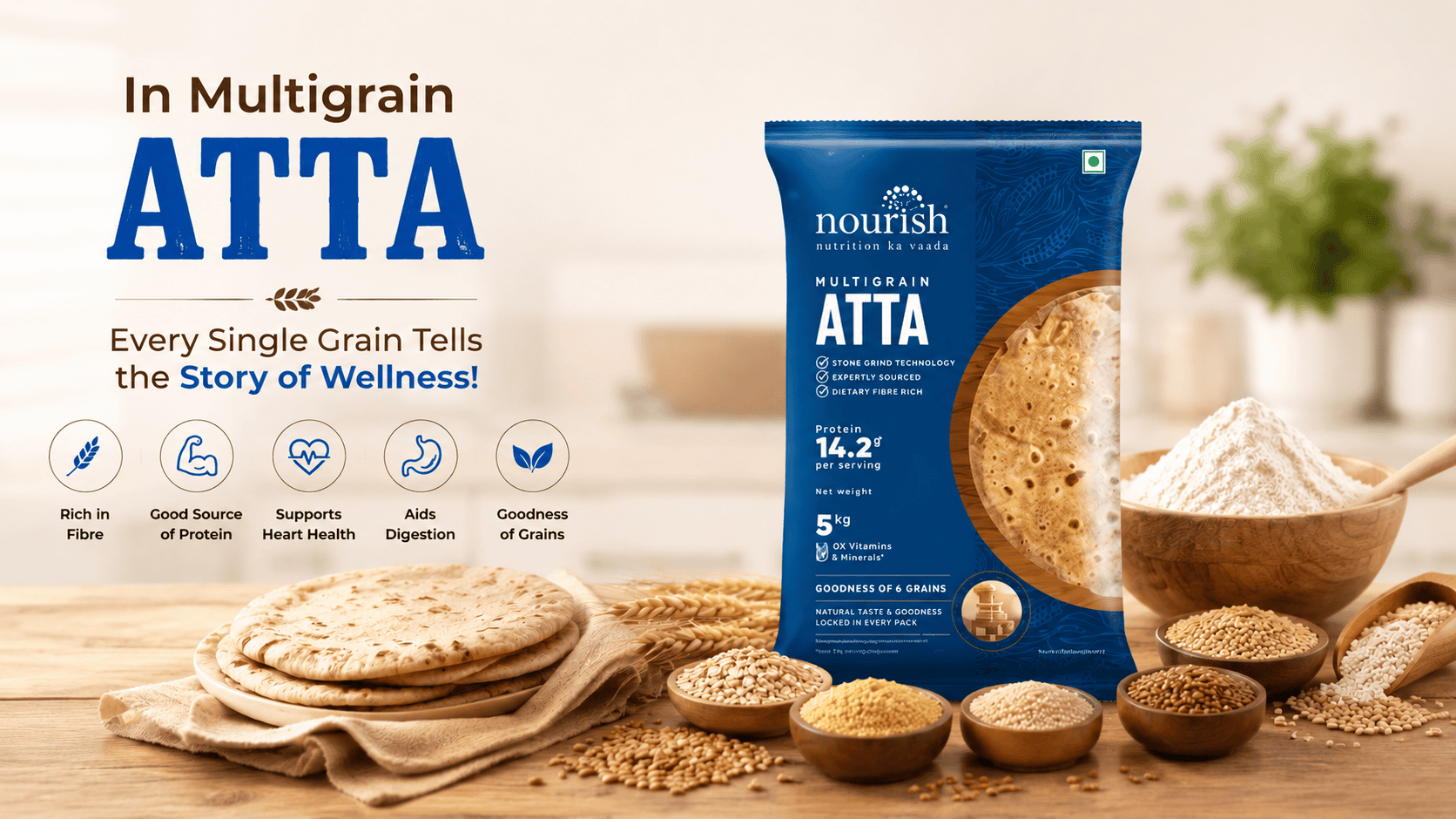
There’s something about a fresh roti that just feels right. It’s simple, filling, and part of everyday meals for most of us. Because it’s so regular, we don’t really stop to think about it. We just eat it and move on.
But sometimes a small thought comes up. What if the same chapati could be a little better for your health without changing your routine at all?
That’s where multigrain atta comes in. It’s not a big shift or something complicated. It’s just a better version of what you already use. Instead of depending on one grain, it combines different grains to make your daily meals a bit more balanced.
What Is Multigrain Atta
MultiGrain Atta is made from a blend of six natural grains collected from the best fields nationwide: 60% wheat and 40% other grains (barley, ragi, corn, chana, and soya bean). A good flavour, dense texture, and rich flavour distinguish multigrain atta.
The best ingredients are carefully selected and blended to provide the ideal combination of taste, texture, and nutrition.
The high fibre content of multigrain atta contributes to good digestion and lowers the risk of chronic diseases like diabetes and heart disease, among other advantages. The blend of grains in multigrain atta is also rich in protein, which is vital for creating and repairing muscles and tissues in the body.
"Multigrain atta is not a trend. It is simply a mix of different grains that brings more balance, fibre, and nutrients to your everyday roti without changing your diet."
Ingredients of Multigrain Atta
A typical mix usually includes
- Whole wheat
- Barley (jau)
- Oats
- Ragi
- Maize
- Bajra
- Jowar
- Sometimes chana or soybean
A mix of grains gives more balanced nutrition compared to a single grain.
Multigrain Atta Nutritional Value per 100 g
| Nutritional Factor | Benefit Details |
|---|---|
| Dietary Fibre | 13.09 g |
| Calories | 364.29 kcal |
| Protein | 13.10 g |
| Vitamins B12 | 0.097 mcg |
| Minerals | 0.98 g |
| Cholesterol | 0 mg |
| Folic Acid | 7.80 mcg |
Multigrain Atta Benefits
Better Digestion
If you often feel heavy after meals, it may be due to low fibre intake. Multigrain atta contains more fibre, which helps support smoother digestion and regular bowel movement.
Steady Energy Levels
Some meals make you feel tired soon after eating. This usually happens when energy is released too quickly. Multigrain atta releases energy more gradually, helping you stay active for longer.
Better Overall Nutrition
The benefit here is simple. You are eating the same roti, but getting more nutrients from it.
Supports Heart Health
Grains like oats and barley are commonly associated with better heart health when included regularly.
Benefits of Multigrain Atta for Weight Loss
If you are trying to manage your weight, multigrain atta can help in a practical way.
- Keeps you full for longer
- Reduces frequent snacking
- Helps maintain balanced blood sugar levels.
- Helps control portion size
- Contains fibre and protein that support healthy eating habits.
Multigrain Atta (flour) Benefits for Skin
Your skin often reflects what you eat.
A better diet supports your body from within, which gradually shows on your skin as well.
- Improved digestion helps reduce internal buildup
- Nutrients like iron and zinc support skin health
- Antioxidants help the body handle daily stress
It is not instant, but consistent eating habits make a visible difference over time.
Multigrain Atta for Summer
During summer, the body usually feels better with lighter foods. Choosing a mix that includes grains like jowar, barley, and oats can make meals feel easier to digest. These grains are often considered lighter and more suitable for hot weather.
This helps you stay comfortable even with regular meals like roti.
Multigrain Atta for Sugar Patient- How It Actually Helps
For people managing blood sugar levels, the type of flour plays an important role. Multigrain atta can be helpful because
- It has a lower glycemic index
- It releases sugar slowly
- It helps avoid sudden spikes
When combined with a balanced diet, it supports better control.
Is Multigrain Atta Good for Digestion?
Yes, in most cases it supports digestion well.
- Improves bowel movement
- Supports gut health
- Helps reduce constipation
If you are new to high-fibre foods, it is better to start gradually.
Multigrain Atta Disadvantages You Should Know
Even healthy food needs to be consumed in balance
- May cause slight bloating initially
- Not suitable for gluten intolerance if wheat is included
- Can feel heavy if consumed in excess
It is not just about what you eat, but also how much you eat.
How Is Multigrain Atta Different from Regular Atta
| Feature | Multigrain Atta | Regular Atta |
|---|---|---|
| Grain Type | Multiple (jowar, bajra, ragi, oats and seeds) | Single (wheat) |
| Nutrition | Addition of diverse grains generally lowers the Glycemic Index (GI), slows sugar absorption | Provides sustained energy but can cause quicker blood sugar spikes |
| Fibre | High fibre content of multigrain atta contributes to good digestion and lowers the risk of chronic diseases like diabetes and heart disease | Lower (3 to 4 grams of fibre per 100 grams) |
| protein | Rich in protein, which is vital for creating and repairing muscles and tissues in the body (13.5 to 15.5 grams of protein per 100 grams) | 11 to 12 grams of protein per 100 grams |
| Taste & Texture | Heartier and denser/td> | Earthy, slightly nutty flavor |
Multigrain Atta Recipes
When you start using something new in your kitchen, the first question is always practical. How do you actually use it in everyday cooking? With multigrain atta, the answer is simple. You do not need to change your cooking style at all.
Roti/Chapati
You start with rotis, just like always. The dough feels familiar, the process stays the same, and after a few tries, even the taste feels completely normal.
Paratha
Parathas work just as well. Whether you prefer them plain or stuffed, the atta adjusts easily. You might notice a slightly nutty taste, but that often becomes something people enjoy.
Cheela
On days when you want something light, cheela is an easy option. Quick to make, filling, and simple enough to fit into a busy routine.You might notice a slight nutty taste at first, but many people start liking it over time, especially when it is eaten with a simple bowl of raita.
Pancakes
If you feel like trying something different, pancakes work too. The flavour turns out a little richer, without making the recipe complicated.
Baked Snacks
Even in baking, it fits in without much effort. The texture may feel a bit different at first, but it becomes familiar over time. In the end, nothing really changes in your kitchen. You cook the same food, the same way. The only difference is that your everyday meals quietly become a little better.
Conclusion
Healthy eating does not always require major changes. Sometimes, simple everyday choices can make a meaningful difference over time. Multigrain atta is one such choice. By combining the goodness of multiple grains, it provides a better balance of fibre, protein, vitamins, and minerals while fitting seamlessly into your daily meals.
Whether your goal is to support digestion, manage weight, maintain steady energy levels, or simply make your rotis more nutritious, multigrain atta can be a practical addition to your kitchen. Choosing a balanced blend like Nourish Multigrain Atta allows you to enjoy the benefits of carefully selected grains in every meal, making everyday eating both wholesome and convenient.
Frequently Asked Questions
Is multigrain atta healthier than regular atta?
Yes, multigrain atta is generally considered healthier than regular atta because it combines multiple grains such as wheat, oats, barley, ragi, and millets. This provides more fibre, protein, vitamins, and minerals compared to single-grain wheat flour. It may also help support digestion, satiety, and overall nutritional balance when included as part of a healthy diet.
Can I eat multigrain atta daily?
Yes, multigrain atta can be consumed daily as part of a balanced diet. It is commonly used to make rotis, parathas, and other everyday meals. Its combination of grains provides fibre and nutrients that can support digestion, energy levels, and overall wellness when eaten in appropriate portions.
Which is better, 100% whole wheat or multigrain?
Both are nutritious options, but they offer different benefits. Whole wheat atta provides the goodness of wheat, while multigrain atta combines several grains to deliver a wider range of nutrients. If you want greater dietary variety, fibre, and balanced nutrition, multigrain atta may be a better choice for everyday meals.
Can I make multigrain atta at home?
Yes, it is often better quality and cheaper than branded options. Buy individual stone-ground flours (wheat 60%, ragi 8%, barley 8%, soya bean 8%, chana 8%, corn 8%) and blend at home. This gives you complete control over grain proportions and quality. Store in an airtight container for up to 2 months.
Is multigrain good for digestion?
Yes, multigrain atta is often considered good for digestion because it typically contains more fibre than regular atta. Fibre supports healthy bowel movements, promotes gut health, and may help reduce constipation. Introducing high-fibre foods gradually and drinking enough water can further support digestive health.