Traditional Ukadiche Modak Recipe: Master the Perfect Rice Flour Dough
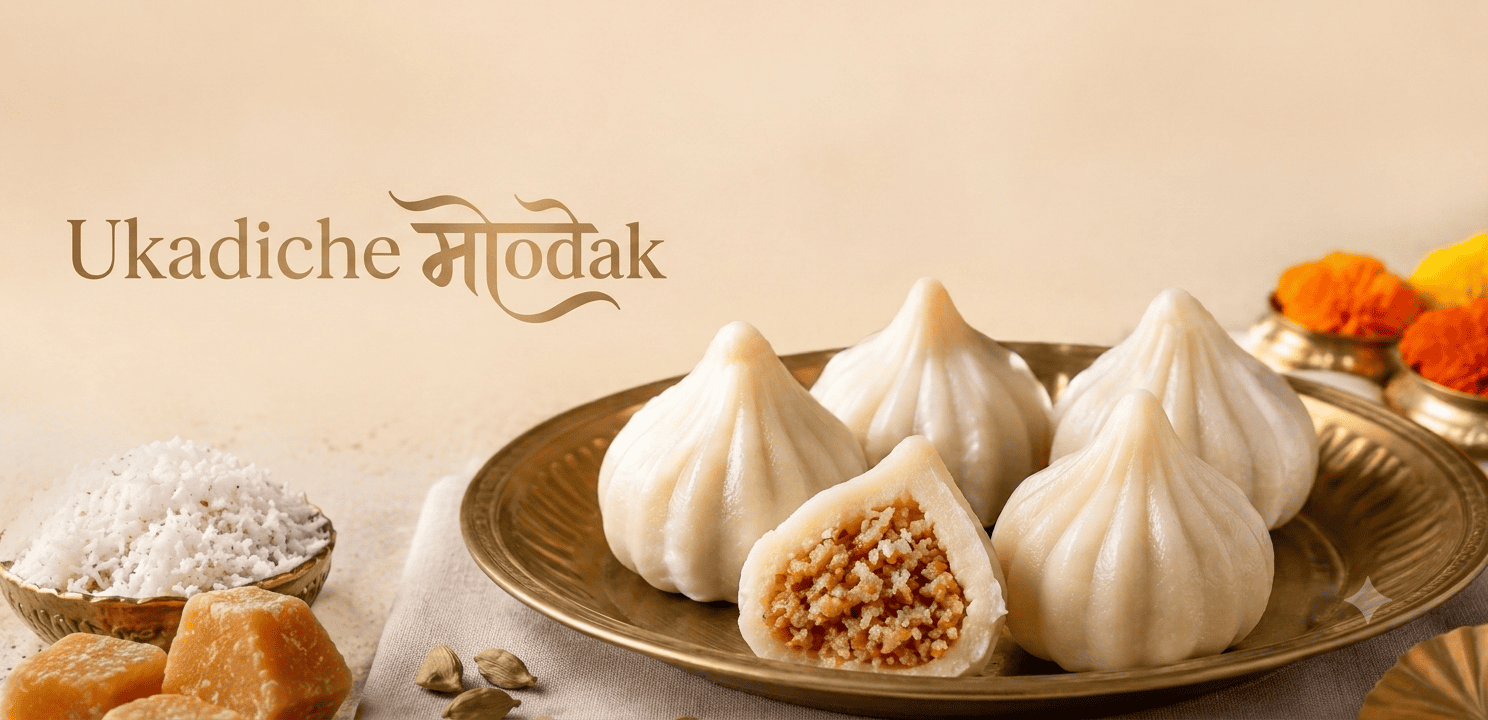
Authentic Ukadiche Modak requires steaming fine rice flour in equal parts boiling water with a pinch of salt and pure cow ghee to form a pliable dough (ukad). Filled with freshly grated coconut, jaggery, and cardamom, the modaks are hand-pleated and steamed for 10–12 minutes until glossy and soft.
Every year, as the first rains of September settle across Maharashtra, kitchens fill with the warm, sweet fragrance of jaggery melting into fresh coconut. That fragrance means one thing - Ganesh Chaturthi is near, and it is time to prepare Ukadiche Modak.
If you have ever struggled with cracked modak shells, sticky dough that refuses to cooperate, or a filling that turns too runny, this guide is written specifically for you. No shortcuts. No guesswork. Just a clear, traditional method passed down through generations of Maharashtrian home cooks - explained in a way that actually works in your kitchen.
The Sacred Offering: Why Ukadiche Modak Belongs on Ganesh Chaturthi
Ukadiche Modak is not just a sweet. It is the most revered naivedya (sacred offering) presented to Lord Ganesha during Ganesh Chaturthi, celebrated on September 14 this year (2026). The word "ukadiche" comes from the Marathi word "ukad," meaning to steam or boil - referring to the method of cooking the rice flour dough.
Unlike fried modaks or the commercially available mawa modaks, the steamed version holds deep cultural significance across Maharashtra, Goa, Karnataka, and Western India. Families in Pune, Mumbai, Kolhapur, and Konkan prepare these by hand, often without moulds, shaping each modak with careful pleats as an act of devotion.
The beauty of Ukadiche Modak lies in its simplicity - just four or five honest ingredients, prepared with patience. The outer shell is nothing but fine rice flour steamed into a smooth, elastic dough. The filling is freshly grated coconut cooked with jaggery and cardamom. No artificial colours. No preservatives. Just real food offered with real love.
According to the Ministry of Culture, Government of India, Ganesh Chaturthi is among the most widely celebrated festivals across Western and Southern India, with traditional food preparation forming the spiritual core of household celebrations.
The Secret to Soft, Crack-Free Modak Cover: Perfect 'Ukad' Steaming
This is where most people struggle - and where this recipe will change everything for you.
The modak cover (the outer shell) is called "ukad" because the rice flour is cooked by pouring it into boiling water and immediately stirring it into a dough. This is not a regular dough. You are not kneading dry flour with water like roti. You are cooking the flour with steam and boiling water simultaneously, which gelatinises the starch and creates that signature smooth, stretchy, slightly translucent shell.
Here is what you need for the outer shell (makes 10–12 modaks):
- 1 cup fine rice flour (use the finest grind available - coarse flour will crack)
- 1 cup water
- 1 teaspoon pure cow ghee
- A pinch of salt
The process - read this carefully before you start:
- Bring 1 cup of water to a full, rolling boil in a heavy-bottomed pan.
- Add the pinch of salt and 1 teaspoon of ghee to the boiling water.
- Reduce the flame to low. Add the rice flour all at once - do not sprinkle it slowly.
- Immediately cover the pan with a tight lid. Let it steam on low heat for 2–3 minutes. Do not stir yet.
- After 2–3 minutes, turn off the flame. Remove the lid and use a spatula or wooden spoon to bring the mixture together into a rough lump.
- Transfer the hot dough onto a plate greased with a few drops of ghee. Let it cool just enough to handle (about 2 minutes - it should still be warm, not cold).
- Knead the dough with your palms, pressing and folding, for 3-4 minutes until it becomes completely smooth, pliable, and free of cracks.
Critical tip: The dough must be kneaded while it is still warm. Cold rice flour dough loses elasticity and will crack when you try to shape it. If it starts cooling too fast, cover it with a damp muslin cloth.
Water-to-Rice Flour Ratios and Ghee Hydration
The ratio is 1:1 - one cup of water to one cup of fine rice flour, plus 1 teaspoon of ghee.
Why does this matter so much?
- Too much water → the dough becomes a sticky, unmanageable paste that sticks to your hands and cannot hold shape.
- Too little water → the flour does not cook through, the dough stays grainy, and the modak shells crack open during steaming.
- Ghee → this is not optional. The ghee adds moisture, prevents the dough from drying out while you shape each modak, and gives the finished shell a subtle, glossy sheen.
If your rice flour is slightly coarser than ideal, you may need 1–2 tablespoons of extra water. Add it during kneading, not during boiling. This gives you control.
Preparing the Authentic Coconut-Jaggery (Saran) Stuffing
The filling - called "saran" or "puran" in Maharashtrian kitchens - is what makes each bite of modak unforgettable. It must be moist, fragrant, and just sweet enough without being cloying.
Ingredients for the filling:
- 1 cup freshly grated coconut (fresh, not desiccated - this is non-negotiable for authentic taste)
- ¾ cup organic jaggery, grated or chopped (adjust to your sweetness preference)
- ½ teaspoon cardamom powder
- A pinch of nutmeg (jaiphal) powder (optional, but traditional in Konkan-style modaks)
- 1 teaspoon pure cow ghee
Method:
- Heat a heavy pan on low flame. Add the grated coconut and jaggery together.
- Stir continuously on low heat. The jaggery will melt and coat the coconut within 4-5 minutes.
- Keep stirring until the mixture thickens and starts leaving the sides of the pan. This takes about 7-8 minutes. Do not rush this step on high heat - the jaggery will burn.
- Add cardamom powder, nutmeg (if using), and ghee. Mix well.
- Remove from heat and let the filling cool to room temperature before stuffing.
Why fresh coconut matters: Desiccated coconut absorbs moisture from the jaggery and makes the filling dry and crumbly. Freshly grated coconut releases its own natural oils during cooking, creating that moist, luscious texture that defines a great modak.
A note on jaggery quality: Use organic, chemical-free jaggery. Dark, unrefined jaggery gives a deeper, more complex flavour compared to the lighter, processed varieties. The Food Safety and Standards Authority of India (FSSAI) recommends checking for the FSSAI license number on packaged jaggery to ensure purity and safety.
Step-by-Step Shaping, Pleating, and Steaming Techniques
Now comes the part that looks intimidating but is genuinely enjoyable once you get the rhythm.
Shaping the modak (without a mould):
- Pinch a lemon-sized ball from the warm dough. Roll it smooth between your palms.
- Flatten it into a small disc (about 3–3.5 inches diameter) using your thumbs, working from the centre outward. Keep the edges slightly thinner than the centre.
- Place 1.5–2 teaspoons of the cooled coconut-jaggery filling in the centre of the disc.
- Gently lift the edges upward, creating small pleats as you go. Traditional modaks have 5–7 pleats. Pinch the pleats together at the top to seal.
- Gently twist and close the top point. The modak should resemble a small, pleated dome.
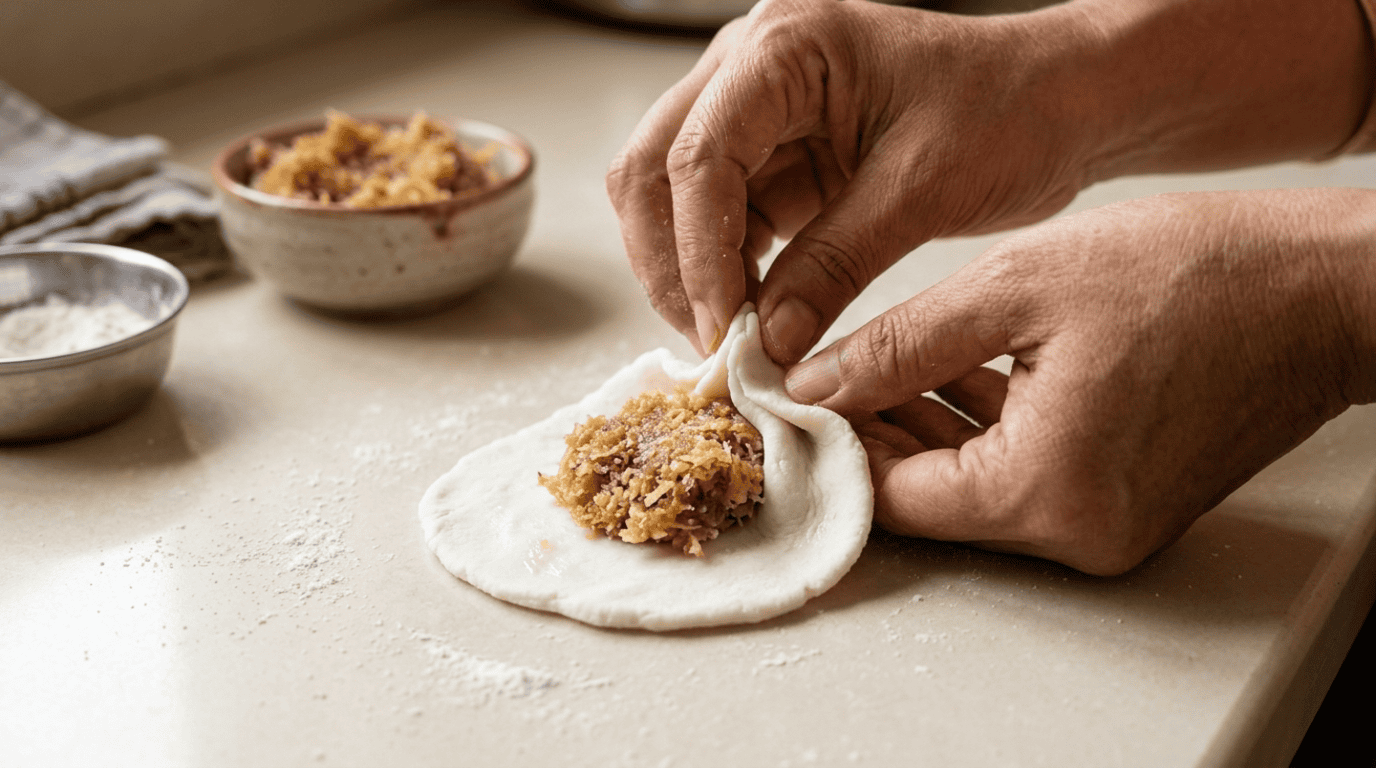 Your first two or three modaks will look imperfect. By the fifth one, your hands will find the rhythm. Every Maharashtrian grandmother will tell you the same thing - the taste matters more than the shape.
Steaming the modaks:
- Prepare a steamer or idli stand. Grease the steamer plate lightly with ghee to prevent sticking.
- Place the shaped modaks on the greased plate, leaving a small gap between each one (they expand slightly).
- Steam on medium-high heat for 10- 12 minutes. Do not open the lid during steaming.
- After 12 minutes, turn off the heat. Let the modaks rest inside the covered steamer for 2 minutes before removing.
- The finished modaks will appear slightly translucent, glossy, and firm to the touch.
Serve warm as naivedya (offers) to Lord Ganesha, and then share with your family. Ukadiche Modak tastes best when eaten within 3- 4 hours of steaming.
Common Modak Troubleshooting: Preventing Dryness and Tears
This is the section most online recipes skip entirely - and it is the section you will need most during your first attempt.
Problem: Dough is cracking while shaping
- Cause: The dough has cooled down too much, or the rice flour was too coarse.
- Fix: Sprinkle a few drops of warm water on the dough and knead again for 1–2 minutes. Cover with a damp (a little wet) cloth between shaping each modak. Always use the finest rice flour available - coarse or medium-grind flour does not gelatinise (turn into a jelly) properly and will always crack.
Problem: Dough is too sticky and sticks to hands
- Cause: Excess water during boiling, or the dough was not steamed long enough in the covered pan.
- Fix: Grease your palms with a tiny amount of ghee before shaping each modak. If the stickiness is severe, add 1–2 tablespoons of dry rice flour during kneading and work it in thoroughly.
Problem: Modaks are opening up or bursting during steaming
- Cause: The top seal was not pinched tightly enough, or the filling was too wet.
- Fix: Ensure the jaggery-coconut filling is cooked until it leaves the sides of the pan. A wet filling generates steam inside the modak and forces it open. Also, pinch the top closure firmly - a loose seal will always open.
Problem: Filling is too dry and crumbly
- Cause: Desiccated coconut was used instead of fresh, or the filling was overcooked.
- Fix: Always use freshly grated coconut. If the filling seems dry after cooking, add 1 teaspoon of warm milk or ghee and mix before stuffing.
Problem: Modaks taste grainy or raw
- Cause: The rice flour was not cooked through during the ukad (boiling) stage.
- Fix: After adding flour to boiling water, ensure you cover and steam for a full 2–3 minutes before stirring. This step cooks the flour. Skipping it or rushing it leaves raw starch in the dough.
Frequently Asked Questions (FAQ)
What is the exact water to rice flour ratio for perfect modak ukad?
The ideal ratio is 1:1, one cup of water to one cup of fine rice flour, with 1 teaspoon of pure cow ghee added to the boiling water before the flour. This ratio helps create a smooth dough for shaping modaks.
How to knead smooth, crack-free rice flour dough for steamed Ukadiche Modak?
After mixing the flour with boiling water, cover it for 2–3 minutes. Transfer the dough to a ghee-greased plate and knead while still warm for 3–4 minutes, pressing and folding until smooth. Keeping the dough warm while kneading makes it easier to shape.
Can I use regular rice flour from the store?
You need the finest grind available. Coarse or medium-grind rice flour may make the dough more difficult to shape smoothly. Look for flour labelled as fine rice flour and suitable for modaks and steamed preparations. Explore Nourish Fine Rice Flour for festive dough and batter preparations.
How long do steamed modaks last?
Ukadiche Modak tastes best when enjoyed fresh. If you need to store them, allow them to cool completely and keep them in a clean, covered container. Storage time can depend on ingredient freshness and storage conditions. Re-steam gently before serving if required.
Are Ukadiche Modak gluten-free?
Traditional Ukadiche Modak made with rice flour, coconut, jaggery, and cardamom does not include wheat, rye, or barley by recipe. Check all packaged ingredients and possible cross-contact before making a specific gluten-free claim.
Can I make the filling a day in advance?
Yes. You can prepare the coconut-jaggery filling in advance, allow it to cool completely, and store it in an airtight container in the refrigerator. Bring it to a suitable serving temperature before stuffing the modaks the next day.