Janmashtami Prasad Recipes: Makhana Kheer, Dhaniya Panjiri, Makhan Mishri & Sattvic Bhog
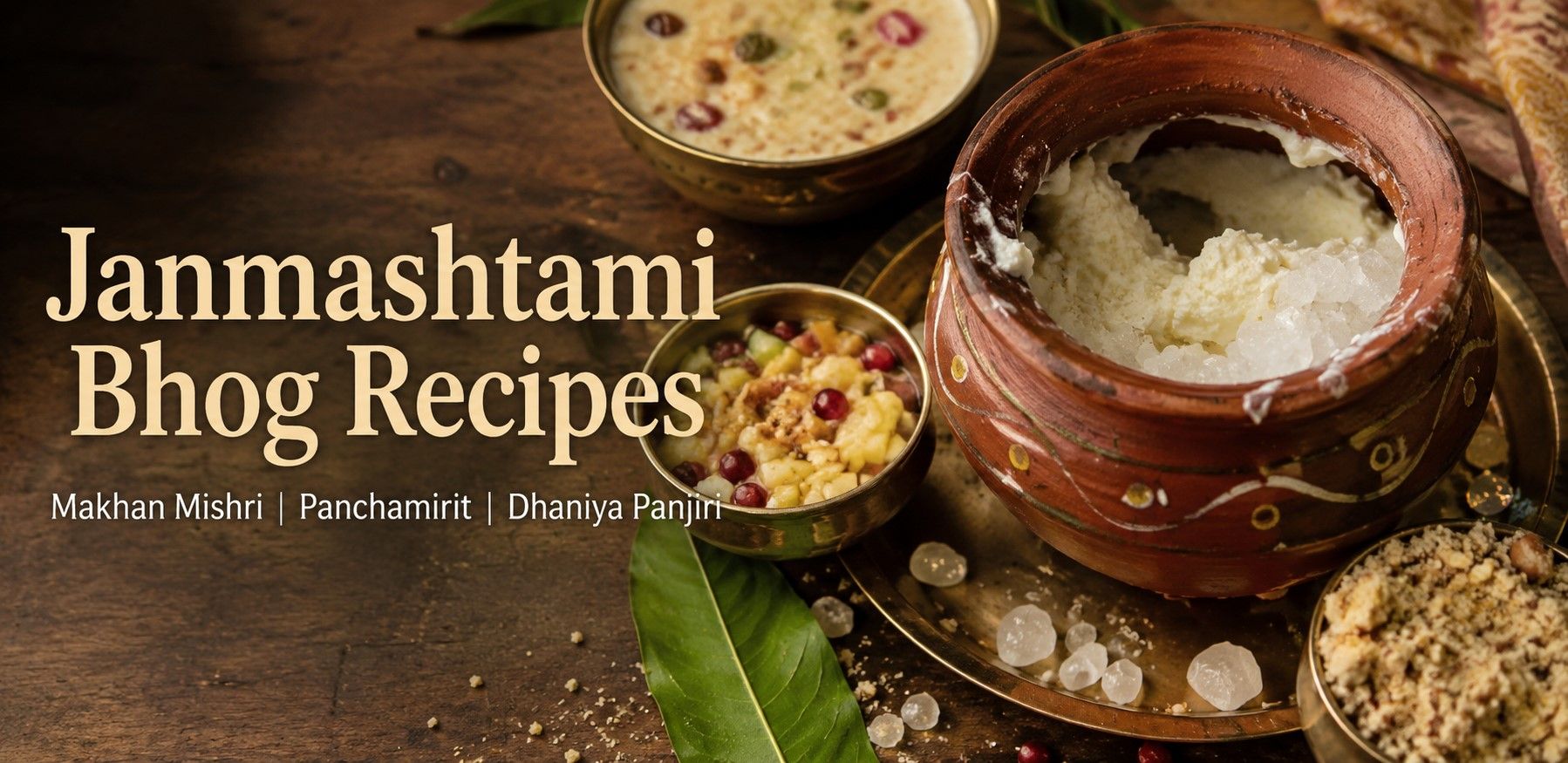
Janmashtami bhog is more than a festive meal. It is a devotional offering prepared with simple, sattvic ingredients and traditional recipes associated with Lord Krishna.
If you are searching for Janmashtami prasad recipes, this complete guide brings together traditional favourites including Makhana Kheer, Dhaniya Panjiri, Makhan Mishri, Panchamrit, Sabudana Kheer and Makhana Paag, along with a practical Sattvic Bhog menu and the significance of Chappan Bhog, or 56 Bhog.
For 2026, Krishna Janmashtami is observed on September 4 in India. The festival is traditionally marked by fasting, midnight worship, abhishek, devotional singing and preparing bhog for Laddu Gopal. Current 2026 coverage also lists Panchamrit, Makhan Mishri, fruits and dairy-based offerings among the important Janmashtami puja preparations.
What Are Traditional Janmashtami Prasad Recipes?
Traditional Janmashtami prasad recipes are vegetarian, sattvic preparations offered to Lord Krishna during Janmashtami. Popular offerings include Makhan Mishri, Panchamrit, Dhaniya Panjiri, kheer, fruits, milk-based sweets and other preparations made according to family and regional traditions.
A complete bhog does not have to contain 56 dishes. A few traditional offerings prepared with devotion can also form a meaningful Krishna bhog.
1. Makhana Kheer (Fox Nut Pudding)
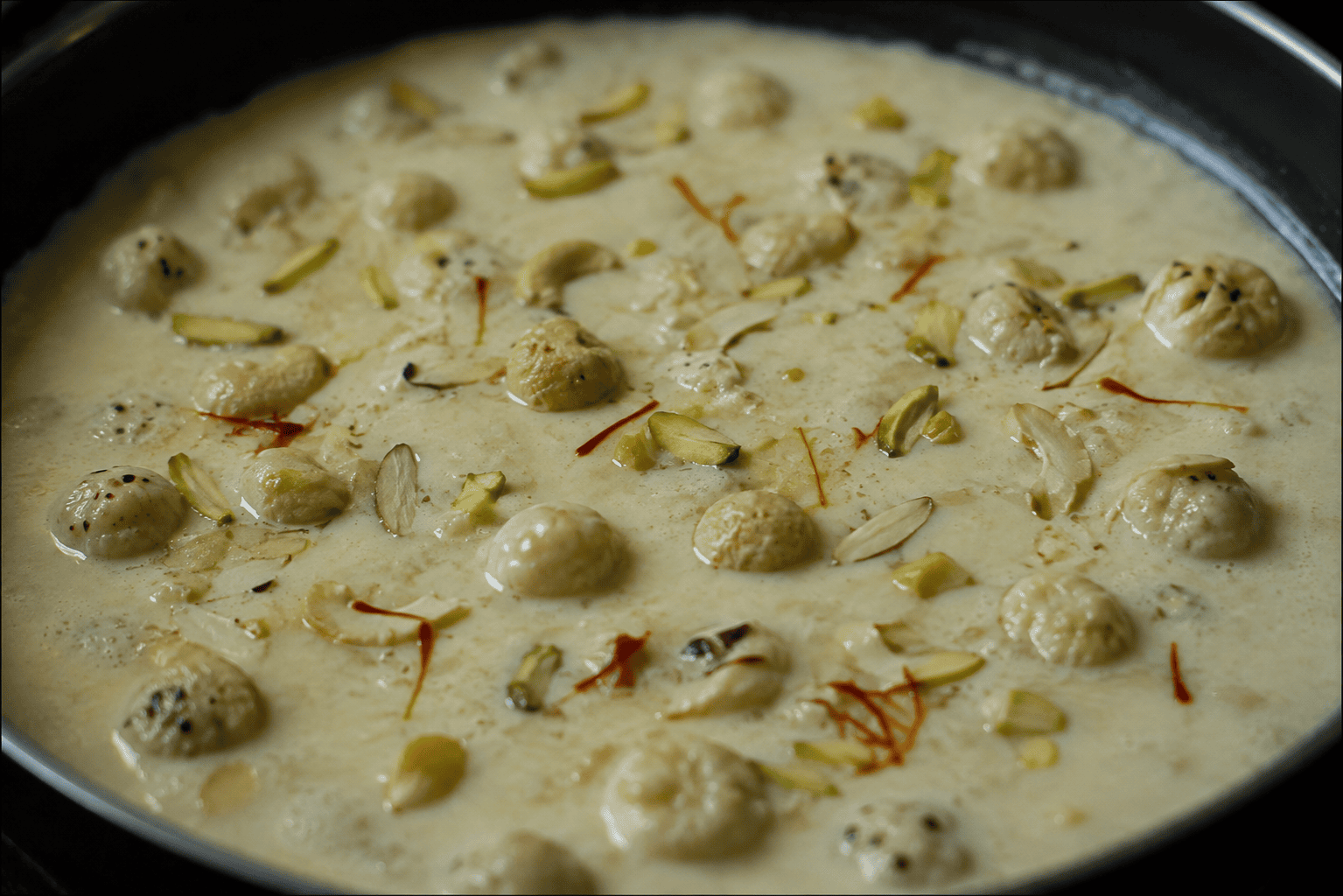
Makhana Kheer is a creamy milk-based dessert made with roasted makhana (lotus seeds), milk, sugar, cardamom and dry fruits. Because makhana is commonly used in fasting preparations, it can be included in a Janmashtami vrat menu when all ingredients follow the fasting rules of your household.
Preparation & Cooking Details
- Preparation Time: 10 minutes
- Cooking Time: 25 minutes
- Total Time: 35 minutes
- Servings: 4
- Best for: Janmashtami bhog and vrat
Ingredients
- 2 cups makhana (Gorgon nut)
- 1 litre milk
- 1–2 tablespoons ghee
- Sugar according to taste
- ¼ teaspoon cardamom powder
- Chopped almonds
- Chopped cashews
- Saffron, optional
Method
- Heat ghee in a heavy-bottomed pan.
- Add makhana and roast on low heat until crisp.
- Crush a portion of the roasted makhana while keeping some pieces whole.
- Bring milk to a gentle boil.
- Add roasted makhana.
- Simmer for approximately 20–25 minutes, stirring occasionally.
- Add sugar and cardamom.
- Add chopped nuts and saffron.
- Serve warm or chilled.
Read the complete Makhana Kheer Recipe on Nourish Store.
Why Roast Makhana Before Making Kheer?
Roasting removes excess moisture and gives the makhana a better texture and deeper flavour. Crushing a portion also helps naturally thicken the kheer without relying on condensed milk.
2. Dhaniya Panjiri (Coriander Seed Offering)
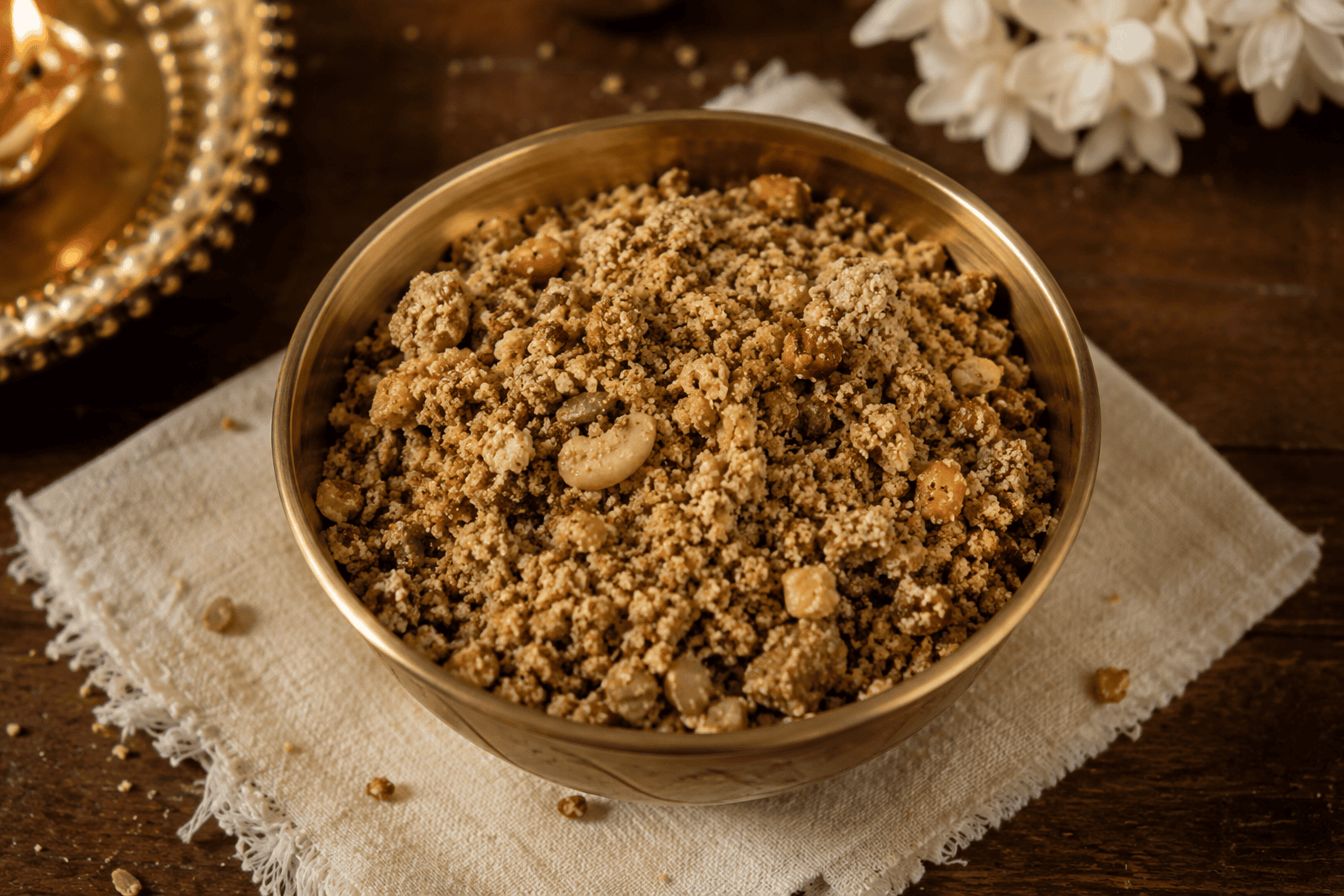
Dhaniya Panjiri is one of the most recognizable Janmashtami prasad recipes, especially in North Indian households.
It combines roasted coriander powder with ghee, powdered sugar, makhana, dry fruits and cardamom to create an aromatic festive prasad.
Preparation & Cooking Details
- Preparation Time: 10 minutes
- Cooking Time: 15 minutes
- Total Time: 25 minutes
- Servings: 4–6
- Best for: Janmashtami prasad and vrat
Ingredients
- 1 cup coriander powder
- 2–3 tablespoons pure cow ghee
- ½ cup powdered sugar or boora
- ½ cup roasted makhana
- Almonds
- Cashews
- Cardamom powder
- Grated coconut, optional
Method
- Heat ghee on low heat.
- Add coriander powder.
- Roast slowly until the raw aroma disappears and the coriander becomes fragrant.
- Roast makhana separately.
- Chop the dry fruits.
- Allow the roasted ingredients to cool slightly.
- Combine coriander, makhana, dry fruits and cardamom.
- Add powdered sugar after the mixture has cooled enough to prevent it from melting.
- Mix well and serve as prasad.
Read the complete Dhaniya Panjiri Recipe on Nourish Store.
Why Is Dhaniya Panjiri Offered on Janmashtami?
Dhaniya Panjiri is strongly associated with Janmashtami prasad traditions, particularly in North India. Current Janmashtami coverage continues to list coriander panjiri alongside Makhan Mishri, Panchamrit and Makhana Kheer as traditional offerings.
3. Makhan Mishri (The Lord's Favorite)
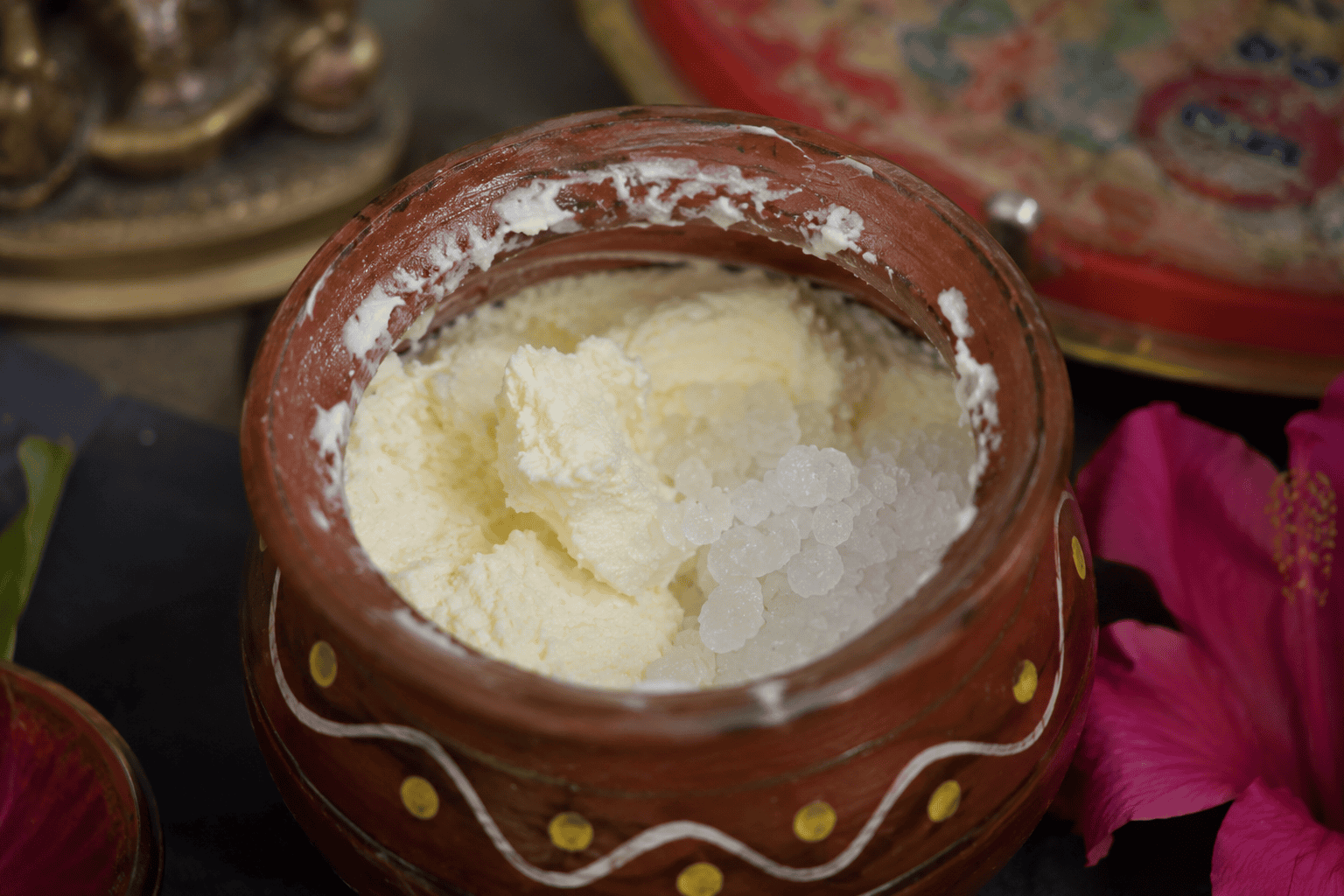
Makhan Mishri (The Lord's Favorite) is one of the simplest and most culturally significant Krishna bhog preparations.
Lord Krishna is traditionally associated with butter and milk products. The affectionate name Makhan-Chor, meaning “butter thief,” comes from popular Krishna childhood stories in which he is described as stealing butter from the homes of the Gopis.
That association is why fresh butter with mishri has become such a recognizable offering for Krishna. Current Janmashtami sources continue to describe Makhan Mishri as a favourite or traditional Krishna offering.
Preparation & Cooking Details
- Preparation Time: 5 minutes
- Cooking Time: No cooking required
- Total Time: 5 minutes
- Servings: 2–4
- Best for: Krishna bhog and Janmashtami prasad
Ingredients
- 1 cup fresh white butter
- 2–3 tablespoons mishri
- Tulsi leaf, according to family tradition
- Pistachios or saffron, optional
Method
- Place fresh white butter in a clean bowl.
- Add mishri crystals.
- Mix gently.
- Add optional garnish according to your family's tradition.
- Keep chilled until serving.
Why Is Makhan Mishri Associated With Krishna?
Krishna's childhood stories are closely associated with butter, giving rise to the beloved image of Makhan-Chor. Makhan Mishri therefore represents more than a sweet dish: it connects the bhog with the playful childhood form of Krishna, especially Laddu Gopal.
Fresh butter and mishri are repeatedly identified in contemporary Janmashtami coverage as traditional Krishna offerings.
4. Panchamrit (The Five Sacred Nectars)
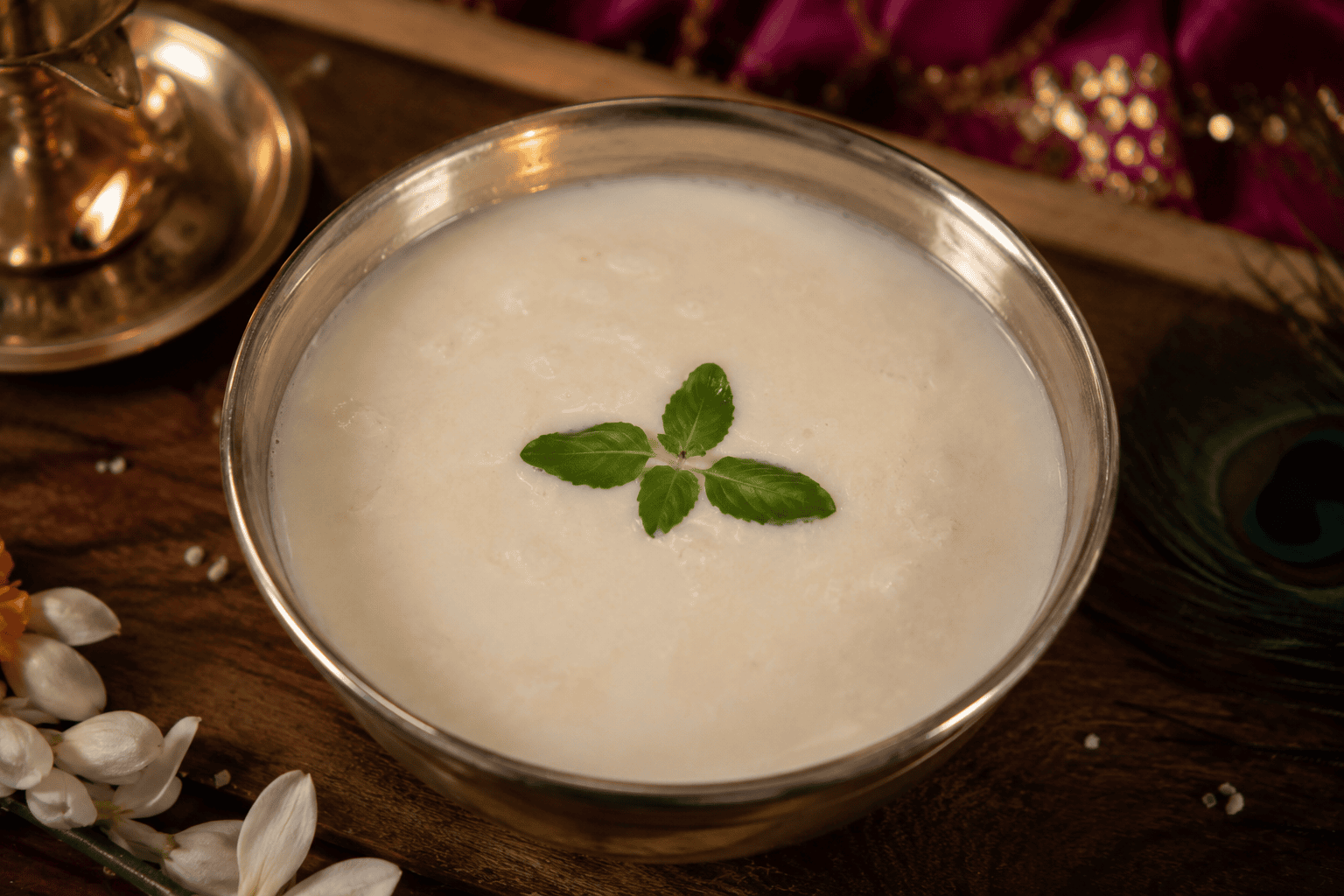
Panchamrit is a traditional sacred preparation associated with puja, abhishek and bhog.
The name refers to the five traditionally associated ingredients:
- Milk
- Curd
- Ghee
- Honey
- Sugar
Some families and traditions additionally include tulsi or other ingredients.
Preparation & Cooking Details
- Preparation Time: 5 minutes
- Cooking Time: No cooking required
- Total Time: 5 minutes
- Servings: 6–8
- Best for: Puja, abhishek and bhog
Ingredients
- 1 cup milk
- ½ cup curd
- 1 teaspoon pure cow ghee
- 1–2 teaspoons honey
- 1–2 teaspoons sugar
- Tulsi leaf, optional according to tradition
Method
- Add milk and curd to a clean bowl.
- Mix gently.
- Add ghee, honey and sugar.
- Stir until combined.
- Add tulsi if followed in your household tradition.
- Keep chilled and prepare fresh for puja.
Panchamrit vs Prasad
Panchamrit is a specific sacred preparation, whereas prasad is the broader term for food offered to a deity and subsequently distributed among devotees.
Therefore, Panchamrit can be one component of a Janmashtami prasad offering.
5. Sabudana Kheer (Vrat-Friendly Milk Dessert)
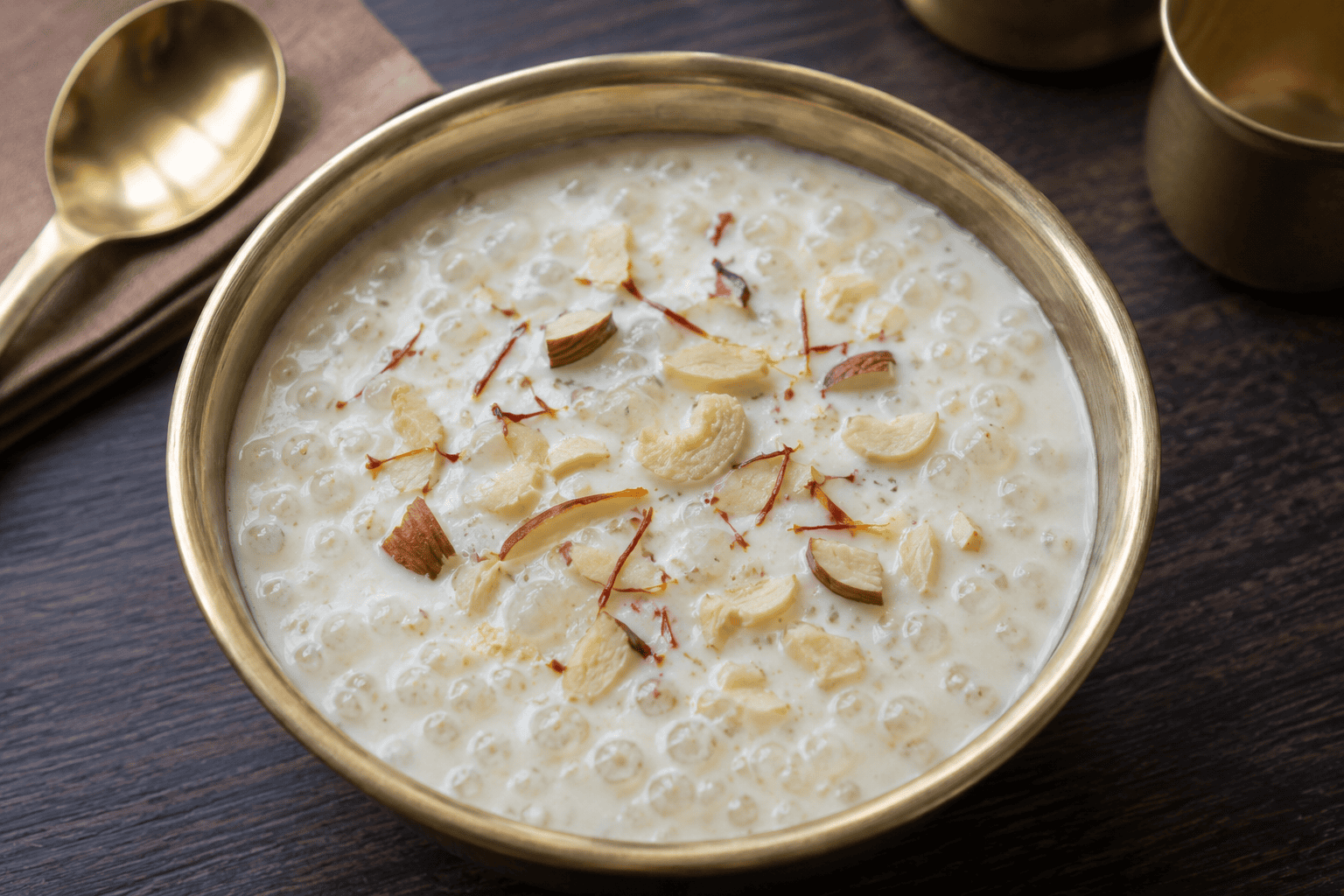
Sabudana Kheer is a creamy dessert made by cooking soaked tapioca pearls in milk with sugar and cardamom.
It is particularly useful for a Janmashtami recipe collection because it connects the prasad & vrat
Preparation & Cooking Details
- Preparation Time: 15 minutes, excluding variable soaking time
- Cooking Time: 25 minutes
- Total Time: Approximately 40 minutes plus soaking
- Servings: 4
- Best for: Vrat and bhog
Ingredients
- ½ cup sabudana
- 500 ml milk
- Sugar according to taste
- ¼ teaspoon cardamom powder
- Almonds
- Cashews
- Saffron, optional
Method
- Rinse and soak sabudana according to the package instructions.
- Heat milk in a heavy-bottomed pan.
- Add soaked sabudana.
- Cook over low to medium heat.
- Stir regularly.
- Continue until the pearls become soft and translucent.
- Add sugar and cardamom.
- Add nuts and saffron.
- Serve warm or chilled.
How Do You Stop Sabudana Kheer From Becoming Mushy?
Avoid excessive soaking and prolonged cooking. Sabudana should become soft and translucent while retaining its shape. The exact soaking requirement varies by pearl size and product, so follow the package instructions where applicable.
6. Makhana Paag (Fox Nut Fudge)
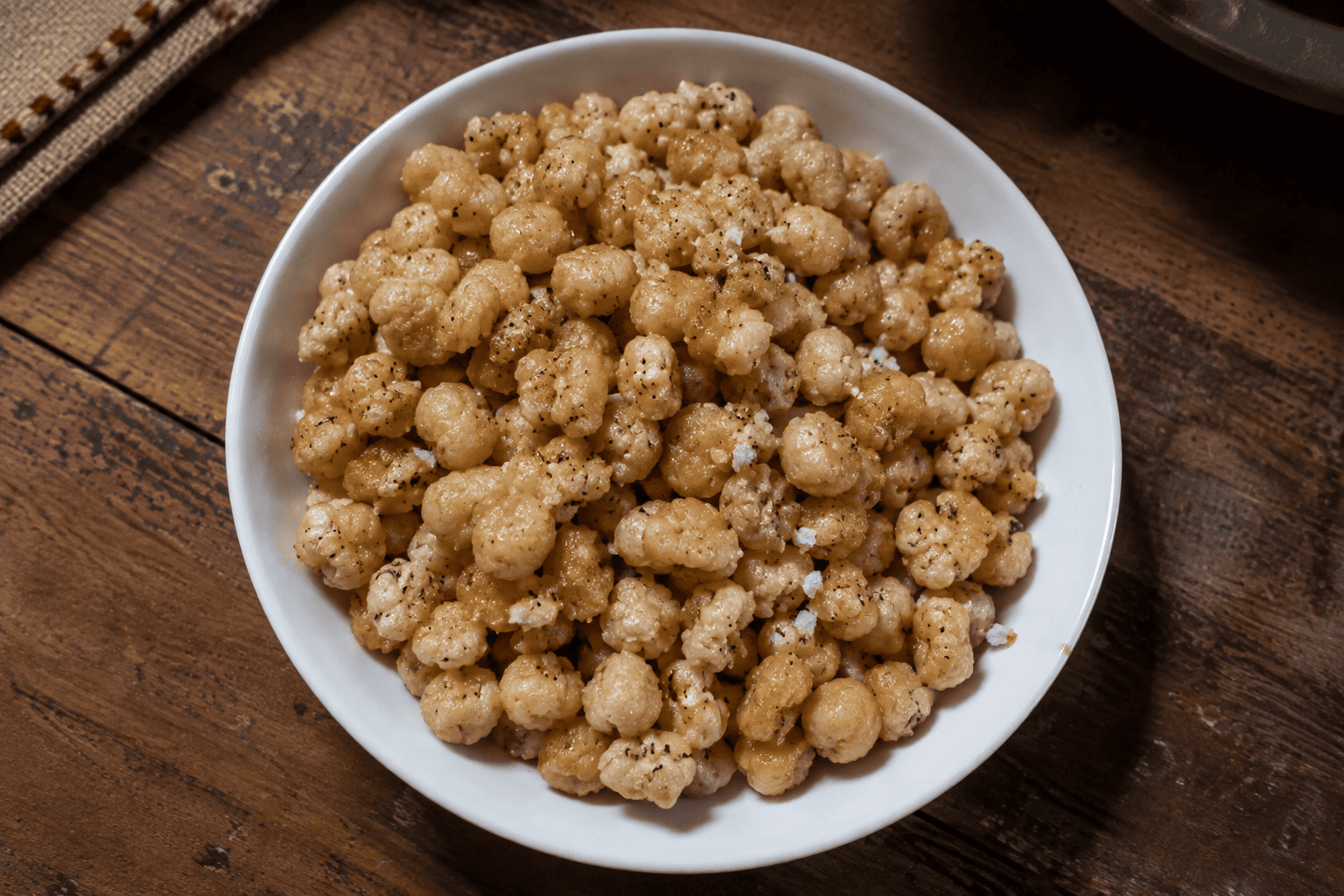
Makhana Paag (Fox Nut Fudge) is a festive sweet made by combining roasted makhana with sugar syrup and other ingredients such as coconut or dry fruits.
Makhana Paag gives a Janmashtami bhog menu a firmer, festive sweet in addition to soft desserts such as kheer.
Preparation & Cooking Details
- Preparation Time: 10 minutes
- Cooking Time: 20 minutes
- Total Time: 30 minutes
- Servings: 6–8
- Best for: Festive bhog and prasad
Basic Method
- Roast makhana until crisp.
- Prepare sugar syrup to the required consistency.
- Add roasted makhana and optional coconut or dry fruits.
- Mix quickly and evenly.
- Transfer the mixture to a greased plate or tray.
- Allow it to cool and set.
- Cut or break into pieces.
The consistency of the sugar syrup is particularly important when making paag because an undercooked syrup may prevent the mixture from setting properly. Current Janmashtami paag recipes similarly emphasize correct syrup consistency.
What Is the 56 Bhog for Janmashtami?
56 Bhog, also called Chappan Bhog, refers to an offering of 56 different food preparations to Lord Krishna.
A popular traditional explanation connects the number 56 with the Govardhan Hill story. According to this tradition, Krishna remained without food while holding Govardhan Hill for seven days, and the Braj community subsequently offered 56 preparations, associated with eight meals per day over seven days: 8 × 7 = 56.
However, the exact 56 items are not universally fixed. Lists vary between regions, temples and traditions. Common lists include sweets, dairy preparations, grains, savouries, fruits, dry fruits, beverages and other vegetarian offerings.
Commonly Listed 56 Bhog Items
Different traditional lists contain different dishes, but commonly mentioned items include:
Sweets:
Makhan Mishri, Kheer, Rasgulla, Jalebi, Rabri, Malpua, Peda, Ladoo, Ghevar, Moong Dal Halwa, Mohanbhog and Shakkarpara.
Dairy & Sacred Offerings:
Milk, curd, butter, malai, ghee and Panchamrit.
Main Foods:
Dal, rice, kadhi, khichdi, roti, puri, saag and vegetables.
Dry Fruits & Fruits:
Almonds, cashews, pistachios, raisins, mango, banana, grapes, apple and seasonal fruits.
Other Offerings:
Chutney, murabba, papad, mathri, kachori, saunf, paan and supari.
These examples are drawn from multiple published 56 Bhog lists, which themselves differ in their exact composition.
Is It Necessary to Prepare All 56 Bhog Items?
No single universal list applies to every household. Preparing 56 dishes is a large undertaking, so many families prepare a smaller selection of traditional offerings according to their own customs.
A simple combination such as Makhan Mishri + Panchamrit + Dhaniya Panjiri + Makhana Kheer + fruits can create a meaningful Janmashtami bhog without requiring an elaborate 56-dish preparation.
Simple Sattvic Bhog Plate for Janmashtami
If you want to prepare a complete Krishna bhog without spending the entire day cooking, use this simple combination:
Traditional 5-Dish Bhog
- Makhan Mishri (The Lord's Favorite)
Fresh white butter with mishri. - Panchamrit (The Five Sacred Nectars)
Milk, curd, ghee, honey and sugar. - Dhaniya Panjiri (Coriander Seed Offering)
Roasted coriander, ghee, sugar, makhana and dry fruits. - Makhana Kheer
Slow-cooked milk, roasted makhana, cardamom and nuts. - Seasonal Fruits
Fresh fruits according to availability and family tradition.
This gives you a balanced bhog selection containing a simple offering, sacred preparation, traditional prasad, creamy dessert and fresh fruit.
Which Ghee Is Best for Janmashtami Prasad Recipes?
Pure cow ghee is the most suitable choice for this recipe cluster when the recipe traditionally calls for ghee.
For Dhaniya Panjiri, Makhana Kheer, Makhana Paag and Panchamrit, use a good-quality, food-grade cow ghee with a clean aroma and fresh taste.
Why Ghee Matters in These Recipes
Ghee is not just a cooking fat in these preparations. It contributes:
- Aroma to roasted coriander in Panjiri
- Richness to Makhana Kheer
- A traditional dairy element to Panchamrit
- Flavour and mouthfeel to Makhana Paag
- A familiar festive character to sattvic preparations
Important: Choose ghee based on quality, food safety and your family's dietary/traditional preference rather than assuming that an “A2” label automatically makes one ghee universally better.
Janmashtami Vrat Cooking Tips
If you are preparing food for someone observing Janmashtami vrat, remember that fasting rules differ between households and traditions.
Check Ingredients Before Cooking
Common vrat ingredients can include makhana, sabudana, milk, curd, fruits and selected fasting flours. However, permitted foods vary according to the fasting tradition being followed.
Use Separate Utensils if Required by Your Tradition
Some households prefer dedicated utensils for fasting food. Follow your family's customary practice.
Avoid Unnecessary Ingredients
Keep recipes simple and avoid ingredients that are not permitted under the specific vrat rules you follow.
Prepare Dairy-Based Bhog Fresh
Panchamrit, Makhan Mishri and milk-based desserts are best prepared close to the time of offering and kept properly refrigerated when necessary.
Frequently Asked Questions
What are the most popular Janmashtami prasad recipes?
Popular Janmashtami prasad recipes include Makhan Mishri, Dhaniya Panjiri, Panchamrit, Makhana Kheer, Sabudana Kheer, Makhana Paag and seasonal fruits. The exact combination varies according to regional and family traditions.
Why is Makhan Mishri offered to Lord Krishna?
Makhan Mishri is associated with Krishna's childhood love of butter. The popular Makhan-Chor stories describe Krishna playfully stealing butter, which is why fresh butter with mishri has become a beloved Krishna bhog.
What are the 56 Bhog items for Janmashtami?
There is no single universally fixed list of 56 Bhog items. Different regions and temples follow different lists. Common offerings include Makhan Mishri, kheer, Panchamrit, dairy products, sweets, dal, rice, vegetables, fruits, dry fruits, savouries and beverages.
Which ghee is best for Janmashtami recipes?
For recipes that call for ghee, choose a good-quality pure cow ghee with a clean flavour and appropriate food-grade quality. It works particularly well for roasting makhana, coriander powder and dry fruits and is traditionally included in Panchamrit.
Can Makhana Kheer be eaten during Janmashtami vrat?
Makhana is commonly used in fasting preparations, but whether a particular Makhana Kheer recipe is permitted depends on the fasting rules followed by the individual or household. Check all ingredients before including it in a vrat menu.
Prepare Your Janmashtami Bhog With Quality Ingredients
Good festive recipes begin with quality ingredients. Explore Nourish Store's Makhana, dry fruits, ghee and other cooking essentials for your Janmashtami preparations.
Janmashtami bhog does not have to be complicated. Whether you prepare one bowl of Makhan Mishri or a complete Chappan Bhog-inspired spread, the heart of the tradition remains the same: preparing food with care and offering it with devotion.