Makar Sankranti 2026: Traditional & Easy Indian Recipes
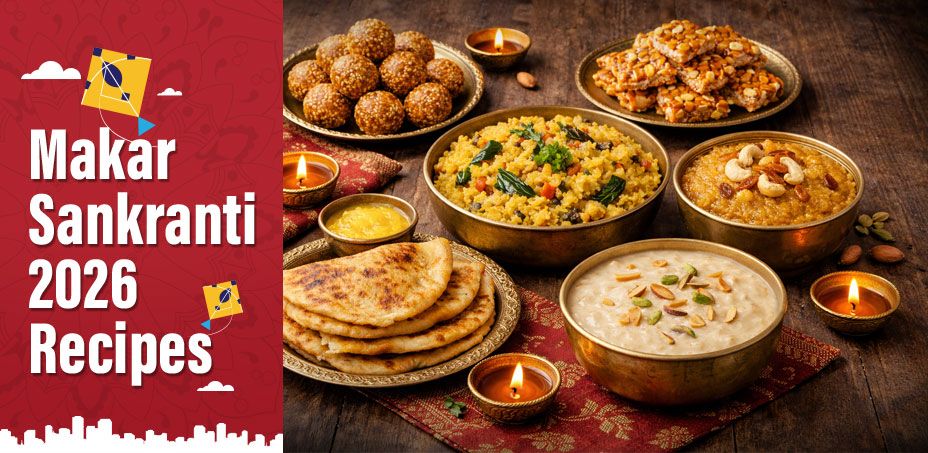
The sun begins its northward journey on 14 January 2026, marking Makar Sankranti, a festival that celebrates the harvest, honours the warmth of winter sunshine, and brings families together over plates of til-jaggery sweets and steaming khichdi. Unlike many Indian festivals tied to the lunar calendar, Sankranti arrives on the same date each year, ushering in crisp mornings and the promise of longer, warmer days ahead.
This is when kitchens across India smell of roasted sesame, melting jaggery, and ghee-laden rice. From Maharashtra's puran poli to Tamil Nadu's sweet pongal, from Gujarat's undhiyu to Bihar's dahi-chura, the recipes may differ, but the sentiment remains the same: gratitude for abundance and the simple joy of sharing food made with love. If you're planning your Sankranti menu this year, these traditional recipes will help you celebrate the festival just the way your grandmother did, with perhaps a little less fuss and a lot more warmth.
Why Certain Foods Are Cooked on Makar Sankranti
There's something deeply comforting about knowing why we cook what we cook. Til (sesame) and gur (jaggery) aren't just ingredients on Sankranti-they're symbols of warmth during the coldest month. Sesame seeds are packed with oil and generate heat in the body, while jaggery is believed to strengthen immunity and balance the winter chill. Together, they create that perfect combination of nutrition and tradition.
Khichdi, especially made with rice and urad dal, is another Sankranti staple. In Uttar Pradesh and Bihar, serving khichdi on this day is almost sacred. The one-pot meal is easy to digest, warming, and uses freshly harvested grains-a direct connection to the earth and the farmer's hard work. Some believe offering khichdi to the Sun God brings prosperity and good health.
Down south, Pongal (the dish, not just the festival name) takes centre stage. Made with newly harvested rice, moong dal, jaggery, and ghee, it's a celebration on a plate. In Maharashtra, til-gul laddus are exchanged with the words "til-gul ghya, god god bola"—take this sweet and speak sweetly. Each region adds its own flavour to Sankranti, but the essence remains rooted in gratitude, warmth, and togetherness.
Traditional Makar Sankranti Recipes You Can Easily Make at Home
These aren't complicated restaurant-style dishes. They're the kind your mother or aunt would whip up without a second thought, using ingredients already sitting in your pantry. No fancy techniques, no pressure-just honest, festive cooking that tastes like home.
Til Gul Laddu (Sesame & Jaggery Laddu)
This is the heart of Sankranti in most North and Western Indian homes. Crunchy, sweet, and packed with the goodness of sesame seeds, these laddus are made in large batches and shared with neighbours, friends, and anyone who drops by.
| Ingredients | Quantity |
|---|---|
| White sesame seeds (safed til) | 1 cup |
| Jaggery, grated or chopped | ¾ cup |
| Ghee | 1 tablespoon |
| Cardamom powder | ½ teaspoon |
| Salt (optional) | A pinch |
Method:
- Dry roast the sesame seeds on medium heat until they turn golden and start popping. Don't let them burn. Transfer to a plate and let them cool slightly.
- In the same pan, add jaggery and 2 tablespoons of water. Stir continuously until the jaggery melts and reaches a soft-ball consistency (when a drop forms a soft ball in water).
- Add ghee and cardamom powder. Mix well.
- Quickly add the roasted sesame seeds and stir until everything is coated evenly.
- Turn off the heat. Let the mixture cool just enough to handle, then grease your palms with ghee and shape into small laddus while still warm.
Serving Tip: Store in an airtight container and serve with tea. They stay fresh for up to two weeks, though they rarely last that long.
Peanut Chikki / Gajak
Chikki is that satisfying crunch you crave during winter evenings. It's simpler to make than you'd think and uses just two main ingredients.
| Ingredients | Quantity |
|---|---|
| Roasted peanuts (without skin) | 1½ cups |
| Jaggery, grated | 1 cup |
| Ghee (for greasing) | 1 tablespoon |
| Cardamom powder | ¼ teaspoon |
Method:
- Lightly crush the roasted peanuts so they're broken but not powdered.
- Grease a flat plate or tray with ghee and keep it ready.
- In a heavy-bottomed pan, melt the jaggery on low heat, stirring continuously. Test by dropping a bit in water-it should form a hard ball.
- Add cardamom powder and the crushed peanuts. Mix quickly.
- Pour the mixture onto the greased plate and spread it evenly using a greased spatula or rolling pin.
- While still warm, cut into squares or diamonds with a sharp knife.
- Let it cool completely before breaking into pieces.
Serving Tip: Pack in boxes and gift to family. It pairs beautifully with a hot cup of chai on cold January mornings.
Urad Dal Khichdi (Sankranti Style)
This isn't your regular khichdi. Made with whole urad dal (black gram), it's richer, earthier, and considered auspicious on Sankranti, especially in North India.
| Ingredients | Quantity |
|---|---|
| Rice (preferably unpolished) | 1 cup |
| Whole urad dal (black gram), soaked for 2 hours | ½ cup |
| Onion, sliced | 1 medium |
| Tomato, chopped | 1 |
| Cumin seeds | 1 teaspoon |
| Ginger-garlic paste | 1 teaspoon |
| Turmeric powder | ½ teaspoon |
| Green chillies, slit | 2–3 |
| Ghee | 2 tablespoons |
| Salt | To taste |
| Fresh coriander | For garnish |
Method:
- Rinse the rice and the soaked urad dal together.
- Heat ghee in a pressure cooker. Add cumin seeds and let them splutter.
- Add sliced onions and sauté until golden. Add ginger-garlic paste and green chillies.
- Add chopped tomato, turmeric, and salt. Cook until the tomato softens.
- Add the rice and urad dal. Stir for a minute.
- Pour in 4 cups of water (adjust for desired consistency). Close the lid and pressure cook for 3–4 whistles.
- Let the pressure release naturally. Open and give it a gentle stir until soft and slightly mushy.
- Garnish with fresh coriander and an extra dollop of ghee.
Serving Tip: Serve hot with curd, papad, and a side of pickle. Some families also offer this khichdi to the Sun God before eating.
Sweet Pongal (Chakkara Pongal)
This Tamil favourite is warmth in a bowl. Made during Pongal celebrations that coincide with Sankranti, it's a dessert that doubles as comfort food.
| Ingredients | Quantity |
|---|---|
| Rice | ½ cup |
| Moong dal (split yellow lentils) | ¼ cup |
| Jaggery, grated | ¾ cup |
| Water (or milk) | 2 cups |
| Ghee | 3 tablespoons |
| Cashews | 10 |
| Raisins | 2 tablespoons |
| Cardamom powder | ½ teaspoon |
| Dry ginger powder (optional) | A pinch |
Method:
- Dry roast the moong dal until aromatic. Rinse rice and dal together.
- Pressure cook rice and dal with 2 cups of water for 3 whistles until soft and mushy.
- In a separate pan, heat ½ cup of water and dissolve the jaggery. Strain if needed.
- Add jaggery syrup to the cooked rice-dal mixture and cook on low heat for 5 minutes.
- Heat ghee in a small pan, fry cashews and raisins until golden. Add cardamom and dry ginger powder.
- Pour this tempering over the pongal and mix gently.
Serving Tip: Serve warm in small bowls, preferably in earthen or brass vessels. Add an extra spoon of ghee if desired.
Puran Poli (Maharashtrian Style)
This stuffed flatbread is a Sankranti must-have in Maharashtra. Sweet, soft, and slathered with ghee, it's everything a festive meal should be.
| Ingredients | Quantity |
|---|---|
| Whole wheat flour | 1 cup |
| Turmeric | A pinch |
| Oil | 1 tablespoon |
| Water | As needed |
| Chana dal (split Bengal gram), soaked | 1 cup |
| Jaggery, grated | ¾ cup |
| Cardamom powder | ½ teaspoon |
| Nutmeg powder | A pinch |
| Ghee | For cooking |
Method:
- Pressure cook soaked chana dal with water for about 4 whistles until very soft. Drain excess water and mash.
- Cook mashed dal with jaggery on low heat, stirring until thick and leaving the pan sides.
- Add cardamom and nutmeg powder. Let the puran cool completely.
- Knead a soft dough using wheat flour, turmeric, oil, and water. Rest for 15 minutes.
- Divide dough and puran equally. Stuff puran inside dough, seal, and roll gently.
- Cook on a hot tawa with ghee on both sides until golden spots appear.
Serving Tip: Serve warm with generous ghee. Some enjoy it with milk on the side.
Rice Kheer (Simple Festive Version)
No Indian festival is complete without kheer. This rice-based version is lighter than the dal-based payasam and loved by kids and adults alike.
| Ingredients | Quantity |
|---|---|
| Basmati rice | ¼ cup |
| Full-fat milk | 1 litre |
| Sugar (or jaggery for a healthier version) | ½ cup |
| Cashews and almonds, sliced | 10 |
| Ghee | 1 tablespoon |
| Cardamom powder | ½ teaspoon |
| Saffron strands soaked in warm milk (optional) | A few |
Method:
- Rinse and soak the rice for 15 minutes. Drain.
- Heat ghee in a heavy-bottomed pan. Fry the nuts until golden and set aside.
- In the same pan, bring milk to a boil. Add the soaked rice and simmer on low heat, stirring occasionally.
- Cook until the rice is soft and the milk thickens slightly (about 25–30 minutes).
- Add sugar (or jaggery) and cardamom powder. Stir well.
- Add the fried nuts and saffron milk if using.
- Turn off the heat. The kheer will thicken further as it cools.
Serving Tip: Serve warm or chilled, depending on preference. Garnish with a few extra saffron strands for a festive look.
Quick Cooking Tips for Sankranti Recipes
Getting the sesame and jaggery right can make or break your Sankranti sweets. Roast sesame seeds on low to medium heat, too high and they'll taste bitter. You want them golden and fragrant, not burnt. A good trick is to roast them until they start popping and give off a nutty aroma.
When buying jaggery, look for organic blocks that are dark brown and firm. Avoid overly sticky or moist jaggery as it can spoil quickly. For laddus and chikkis, the jaggery syrup consistency is everything. Use the water-drop test: drop a bit of hot syrup in a bowl of water. If it forms a firm ball, it's ready. If it dissolves, cook a bit longer.
Ghee is your best friend in winter cooking. It not only adds flavour but also provides the body with much-needed warmth and energy. Don't shy away from using it generously in your Sankranti dishes—it's tradition, not indulgence.
Many Sankranti recipes can be made a day or two in advance. Laddus, chikkis, and even puran (the filling) can be prepared ahead, leaving you free to enjoy the festival without stress. Just store everything in airtight containers to maintain freshness.
Frequently Asked Questions
What food is traditionally prepared on Makar Sankranti?
Til-gul laddus, chikki, khichdi, sweet pongal, and puran poli are some of the most popular Sankranti dishes. The festival celebrates sesame, jaggery, and freshly harvested grains.
Why are til and jaggery eaten on Makar Sankranti?
Sesame seeds generate heat in the body and are rich in healthy fats, making them ideal for winter. Jaggery boosts immunity and balances the cold.
Which khichdi is made on Makar Sankranti?
In North India, especially Uttar Pradesh and Bihar, khichdi made with rice and urad dal is traditionally prepared and offered to the Sun God.
What are easy Makar Sankranti recipes for beginners?
Til-gul laddus, peanut chikki, and rice kheer are simple recipes that require minimal ingredients and basic cooking skills.
What is the special food for Pongal during Sankranti?
Sweet pongal (or chakkara pongal) is the signature dish of the Tamil Pongal festival, made with rice, moong dal, jaggery, and ghee, symbolising prosperity and gratitude.
Celebrating Makar Sankranti with Homemade Food
There's a certain magic in making festival food at home. The smell of roasting sesame, the sticky warmth of jaggery on your fingers, the way a simple khichdi tastes better when shared with family-these are the moments Sankranti is really about.
This Makar Sankranti, keep it simple. Pick two or three recipes that excite you, gather your ingredients from trusted sources-good quality sesame seeds, wholesome unpolished dals, and pure ghee make all the difference-and spend a slow afternoon in the kitchen.
Let the festival come to life not just through rituals, but through the food that has nourished generations. After all, every laddu shaped, every poli rolled, every spoonful of kheer served, is a small prayer of gratitude for the abundance we've been given.